Aug 26, 2026
Onions are one of the most widely used ingredients in savory foods, but handling fresh onions at industrial scale is not always simple. Fresh onions require storage, peeling, cutting, processing, and careful control of moisture and microbial quality. They also have a relatively short practical handling window compared with dried ingredients.
For food manufacturers, onion powder offers a more convenient and consistent way to bring onion flavor into commercial formulations.
Made from dried onions and processed into a fine powder, onion powder can provide a concentrated savory profile while being easier to transport, store, weigh, blend, and incorporate into finished products.
From seasoning blends and sauces to snacks, instant foods, meat products, and ready-to-eat meals, onion powder has become a practical ingredient across the food industry.
But convenience is only part of the story.
Why do food manufacturers choose onion powder instead of fresh onions or other onion ingredients?
The answer involves formulation efficiency, flavor consistency, storage, processing, and the growing demand for convenient savory ingredients.
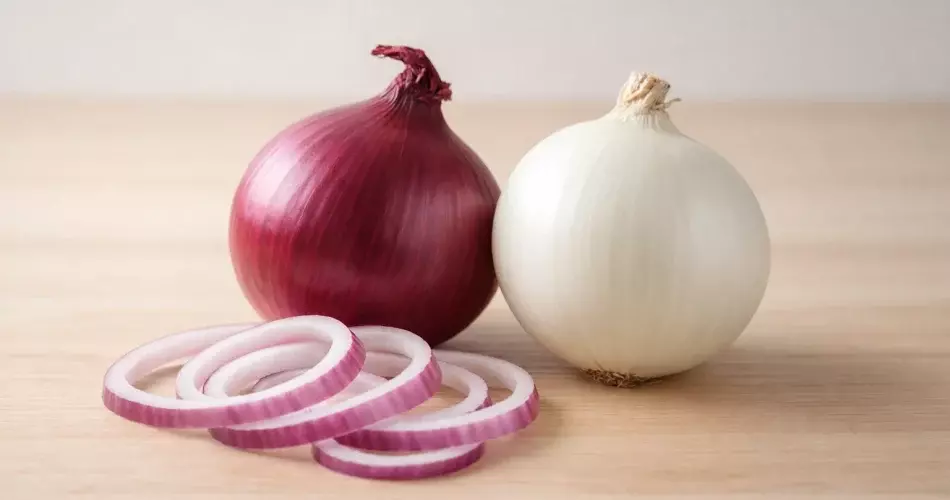
One of the biggest reasons manufacturers choose onion powder is straightforward:
It provides onion flavor in a shelf-stable dry format.
Fresh onions contain a high proportion of water and need to be handled as an agricultural product. Manufacturers using fresh onions may need to manage:
Washing
Peeling
Cutting
Storage
Waste
Processing equipment
Seasonal and raw-material variability
Onion powder removes many of these steps from the formulation process.
A manufacturer can measure a defined quantity of powder and add it directly to the production system.
This can be particularly useful when producing products in large batches where ingredient consistency and process efficiency are important.
Modern food manufacturing relies heavily on dry premixes.
Think about products such as:
Instant soups
Seasoning blends
Snack coatings
Sauce mixes
Gravy powders
Instant noodles
Prepared meal mixes
A liquid or fresh onion ingredient is not always convenient in these systems.
Onion powder, by contrast, can be incorporated into a dry ingredient blend with relatively little additional processing.
It can be weighed alongside ingredients such as:
Garlic powder
Black pepper
Paprika
Chili powder
Salt
Herbs
Other spices
This makes onion powder particularly valuable for manufacturers producing standardized dry seasoning systems.
Another reason onion powder remains commercially relevant is its versatility.
A single onion powder specification can potentially serve multiple product categories, depending on the required flavor intensity and technical characteristics.
Snacks
Onion powder is commonly used in savory snack formulations such as:
Potato chips
Corn snacks
Crackers
Popcorn seasonings
Extruded snacks
Nut and seed seasonings
It can contribute a familiar savory note without adding significant moisture to the seasoning system.
Soups and Instant Foods
Onion is a classic component of many savory food profiles.
Powdered onion can be used in:
Instant soups
Soup bases
Noodle seasoning
Bouillon-style formulations
Instant meal mixes
Its dry format makes it particularly suitable for products designed for long storage and rapid preparation.
Sauces and Gravies
Onion powder can contribute background savory flavor to:
Sauces
Gravies
Dips
Dressings
Marinades
Seasoning pastes
In these applications, manufacturers should evaluate how the powder disperses in the liquid system and how its flavor develops during cooking.
Meat and Alternative Protein Products
Onion is a familiar flavor component in many meat formulations.
Potential applications include:
Sausages
Meatballs
Burgers
Meat marinades
Processed meat products
Plant-based meat alternatives
For plant-based products in particular, onion powder can help build a more complex savory flavor profile when combined with other spices and flavor ingredients.
Food manufacturers are constantly balancing quality, production efficiency, labor, and cost.
Fresh onions can introduce additional processing requirements.
With onion powder, the manufacturer receives a ready-to-use dry ingredient.
This can simplify:
Storage
Powdered ingredients can generally be stored in a controlled dry environment without the refrigeration requirements associated with many fresh raw materials.
Transportation
Removing much of the water from the raw material can make dried ingredients more convenient to transport.
Weighing
A standardized powder can be accurately weighed according to the formulation.
Blending
Onion powder can be incorporated into premixes and seasoning systems.
Production Planning
A shelf-stable dry ingredient can make inventory management more predictable than relying entirely on fresh produce.
Of course, storage conditions still matter. Onion powder should be protected from moisture, excessive heat, contamination, and unsuitable storage conditions.
For industrial food production, flavor consistency is critical.
Consumers expect the same product to taste similar every time they purchase it.
Fresh agricultural ingredients can naturally vary according to:
Variety
Growing conditions
Harvest timing
Storage
Moisture
Processing
A standardized dried ingredient can help manufacturers control the amount of onion material incorporated into each batch.
However, onion powder is still an agricultural-derived ingredient, so some variation can occur.
This is why professional manufacturers should establish clear specifications covering parameters such as:
Appearance
Flavor
Moisture
Particle size
Microbiological limits
Other relevant quality parameters
Supplier quality control remains essential to batch-to-batch consistency.
Onion is a complex flavor ingredient.
Its sensory contribution can include:
Sweetness
Savory character
Mild pungency
Roasted or cooked notes
Aromatic depth
The final flavor depends on the onion variety and processing method.
Drying can also change the sensory profile compared with fresh onion.
This gives food developers different ways to build a savory flavor system.
For example, onion powder can be combined with garlic, herbs, spices, yeast-derived ingredients, or other savory components to create a more layered flavor profile.
The result is not simply “more onion.”
It can be a more complete savory base.
Convenience continues to influence food product development.
Consumers increasingly expect foods that are:
Easy to prepare
Convenient to store
Quick to cook
Consistent in taste
Suitable for busy lifestyles
This trend creates opportunities for ingredients that simplify food manufacturing.
Onion powder fits naturally into this environment because it can be incorporated into products designed for convenience.
Examples include:
Instant soup → onion powder as part of the seasoning base
Instant noodles → onion powder in the flavor sachet
Frozen meals → onion powder in sauces or seasoning systems
Snack foods → onion powder in dry coatings
Meal kits → onion powder in pre-measured seasoning blends
This makes onion powder particularly relevant to manufacturers developing ready-to-use and ready-to-cook food products.
Fresh onion introduces water into a formulation.
That can be useful in some recipes but problematic in others.
A dry powder allows formulators to add onion flavor without introducing the same quantity of water associated with fresh onion.
This can be particularly useful for:
Dry seasoning blends
Powdered sauces
Instant foods
Snack coatings
Dry soup mixes
The manufacturer can therefore control the moisture balance of the formulation more precisely.
However, onion powder should not automatically be considered a one-to-one substitute for fresh onion. The two ingredients have different physical properties and sensory characteristics.
Choosing an onion powder supplier should go beyond comparing price per kilogram.
Buyers should understand what type of onion is used and whether the supplier can provide appropriate raw-material information.
Drying technology can influence:
Aroma
Color
Flavor
Moisture
Physical characteristics
Ask suppliers for relevant processing and product information when these factors are important to your application.
Particle size can influence:
Blending
Dispersion
Mouthfeel
Seasoning adhesion
Processing performance
A fine powder may be appropriate for some applications, while granulated onion may be better for others.
Moisture control is particularly important for powdered food ingredients.
Excess moisture can affect:
Flowability
Caking
Storage stability
Microbiological quality
Manufacturers should establish appropriate microbiological specifications according to the intended application and target market.
Requesting samples and conducting application trials is recommended before large-scale purchasing.
The important question is not simply:
“Does this powder smell like onion?”
It is:
“Does this powder deliver the right onion profile in our finished product?”
The most successful applications usually start with the final product rather than the ingredient itself.
For Dry Seasonings
Focus on particle size, blending uniformity, flowability, and flavor strength.
For Beverages or Liquid Foods
Evaluate dispersion, flavor intensity, and interactions with the liquid matrix.
For Snacks
Test adhesion, seasoning distribution, and flavor release.
For Sauces
Evaluate how the onion flavor develops during heating and storage.
For Meat Products
Consider how onion powder interacts with proteins, salt, spices, and processing conditions.
This application-specific approach can help manufacturers select a more suitable specification and avoid unnecessary formulation adjustments.
At Hunan MT Health, we provide botanical and food ingredient solutions for B2B customers developing food and beverage products.
Our Onion Powder can be considered for applications including:
Seasoning blends
Snacks
Instant soups
Noodles
Sauces
Gravies
Meat products
Plant-based foods
Ready-to-eat meals
Food premixes
For commercial buyers, we can support discussions around:
Product specifications
Particle size
Packaging
Quality requirements
Samples
COA and relevant technical documentation
Bulk supply requirements
Our objective is not simply to supply an ingredient. It is to help customers identify an onion powder specification that fits their production process and finished-product requirements.
Why do food manufacturers choose onion powder?
Because it solves several practical formulation challenges at the same time.
It provides a familiar savory ingredient in a convenient dry format, supports consistent recipe development, works across numerous food categories, and can simplify the handling and storage of onion-derived ingredients.
For manufacturers, the most important consideration is not simply finding an inexpensive onion powder. It is finding a product with the right flavor profile, particle size, moisture level, quality specifications, and performance for the intended application.
As food production continues to move toward convenient, scalable, and standardized formulations, onion powder remains a practical ingredient for both established food categories and new product development.
Hunan MT Health supplies Onion Powder for B2B food manufacturers, ingredient distributors, and product developers.
If you are developing a seasoning blend, snack, instant food, sauce, meat product, plant-based food, or other savory formulation, contact our team to discuss your requirements.
We can provide product specifications, samples, technical information, COA support, and bulk quotation options based on your project.
Looking for a reliable onion powder ingredient for your next food innovation project? Contact Hunan MT Health today.
Hunan MT Health gør sit bedste for at forstå kundernes behov, forudsige markedsændringer, fremsætte innovative løsninger, vedtage kreativ tænkning og avanceret teknologi for at forbedre bedre service. Du er velkommen til at besøge vores virksomhed når som helst!
Chat
Efterlad din besked
Send din forespørgsel


 DA
DA  EN
EN  ZH
ZH  AR
AR  TH
TH  EN_GB
EN_GB  DE
DE  ES
ES