
Purple Potato Powder
Solanum tuberosum L.
Root
Powder
Purple powder
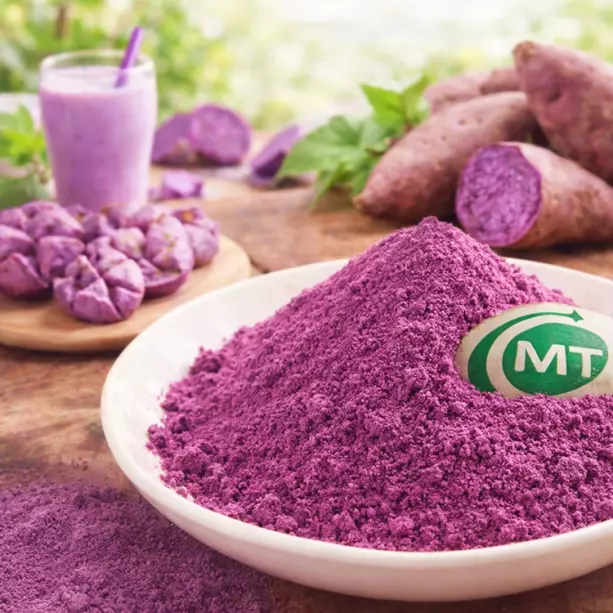
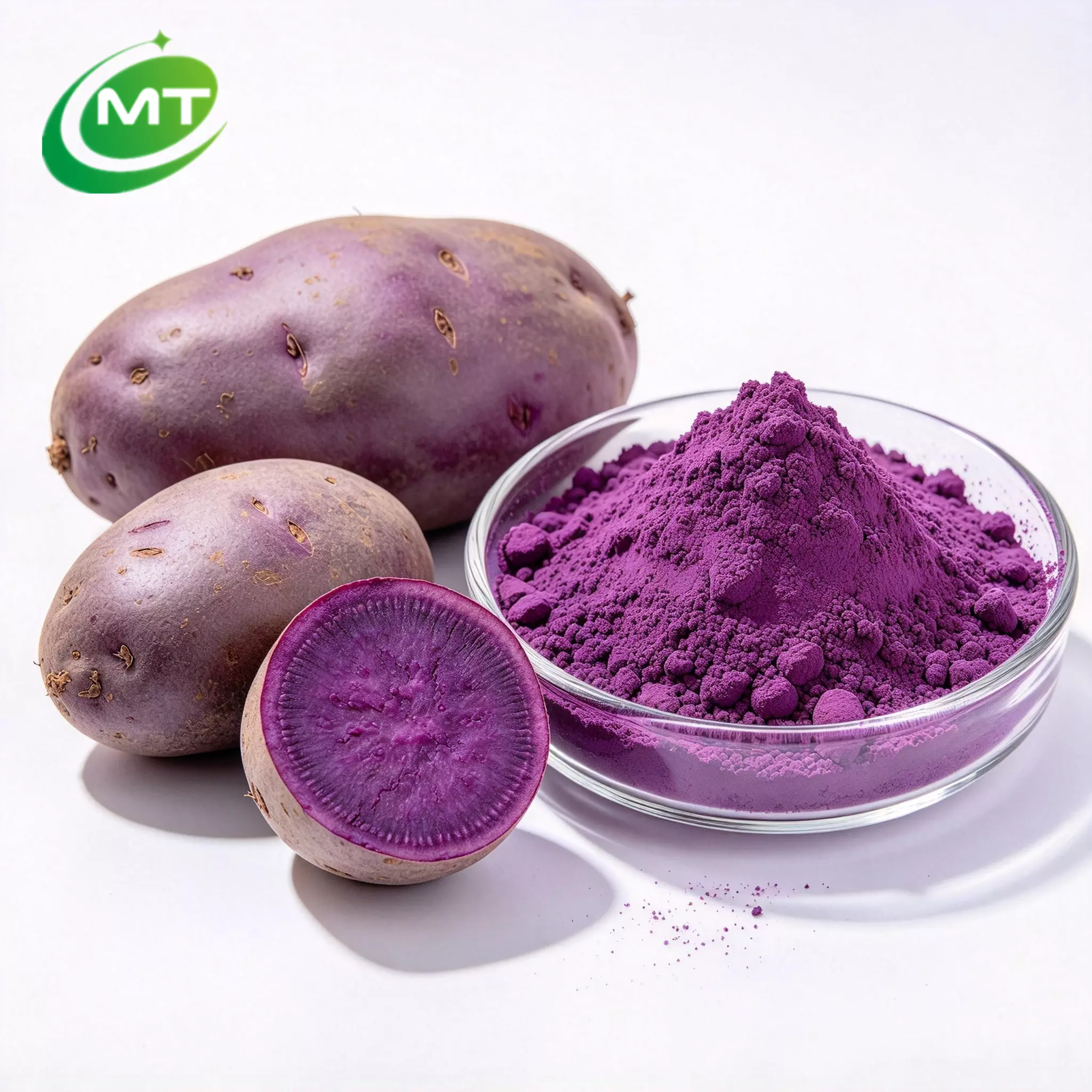
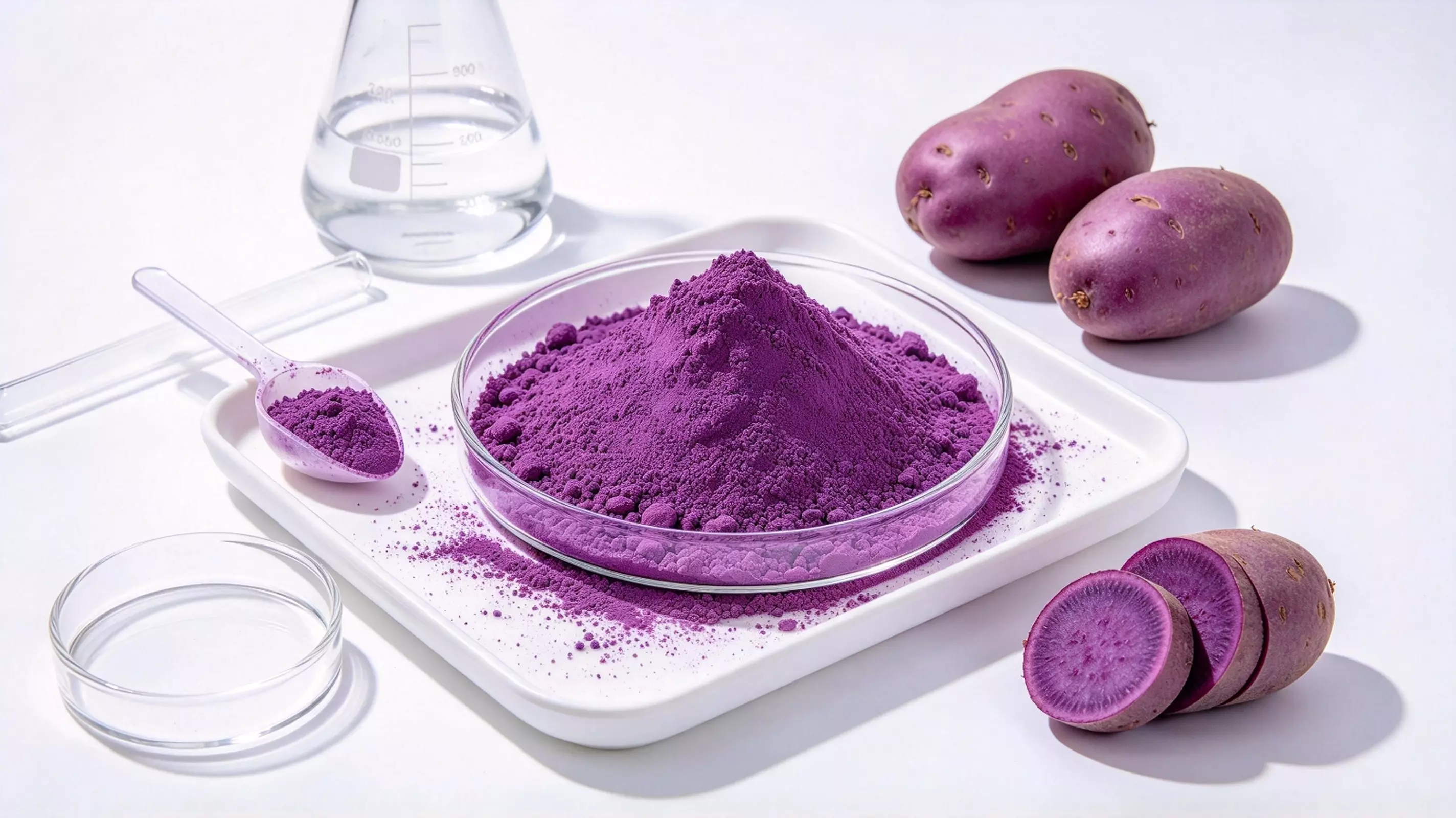
Purple Potato Powder is a versatile vegetable-derived ingredient made from purple-fleshed potatoes (Solanum tuberosum). By processing purple potatoes into a powder, manufacturers can incorporate this distinctive raw material into food formulations without the preparation and handling associated with fresh potatoes.
Purple potatoes are known for their characteristic purple flesh, which contains naturally occurring anthocyanins. These plant pigments contribute to their distinctive appearance, making purple potato powder an interesting ingredient for food developers looking to explore naturally colorful, vegetable-based product concepts.
For food ingredient distributors, food processors, and product development teams, purple potato powder offers opportunities to create differentiated products across multiple categories. Its suitability depends on the powder’s composition, processing method, and the technical requirements of the final application.
A Distinctive Vegetable Ingredient
Unlike conventional white potato powder, purple potato powder comes from potato varieties with purple-colored flesh. This difference creates opportunities for manufacturers seeking ingredients with a distinctive visual identity.
The purple color is associated with anthocyanins, although pigment concentration and color intensity vary by potato variety and processing conditions. The actual color contribution should therefore be assessed using a product sample and application testing.
A Practical Format for Food Manufacturing
Powdered ingredients can simplify weighing, blending, and formulation compared with fresh raw materials. Purple potato powder can be incorporated into dry ingredient systems and selected processed foods, subject to its moisture content, particle size, and other technical properties.
For manufacturers, choosing a powder format may also help streamline ingredient handling across different production stages. Storage requirements and shelf life should always be established from the supplier’s product specifications.
An Ingredient for Product Differentiation
Color can play an important role in product presentation and consumer perception. Purple potato powder allows developers to explore distinctive shades in products such as baked goods, savory snacks, and specialty food mixes.
Rather than assuming the powder will perform identically in every recipe, manufacturers should evaluate its contribution to color, flavor, texture, and processing performance within their own formulations.
Not all purple potato powders have the same functional properties. Differences in raw material, drying conditions, milling, and additional processing can affect their performance.
Before selecting a supplier, food manufacturers should evaluate the following factors:
Color performance: Determine whether the powder provides the desired shade in the finished product, rather than judging it only in its dry form.
Particle size: Check whether the powder blends evenly with the other ingredients and meets the requirements of the production equipment.
Moisture and water absorption: Understand how the ingredient may affect dough, batter, dry mixes, or reconstituted foods.
Flavor compatibility: Confirm that the characteristic potato flavor is suitable for the intended application.
Processing stability: Test the ingredient under actual production conditions, including heating, cooling, and storage where relevant.
Product consistency: Review batch specifications and quality documentation to establish acceptable variation between deliveries.
A systematic evaluation can help product development teams reduce unnecessary formulation changes and make more informed sourcing decisions.
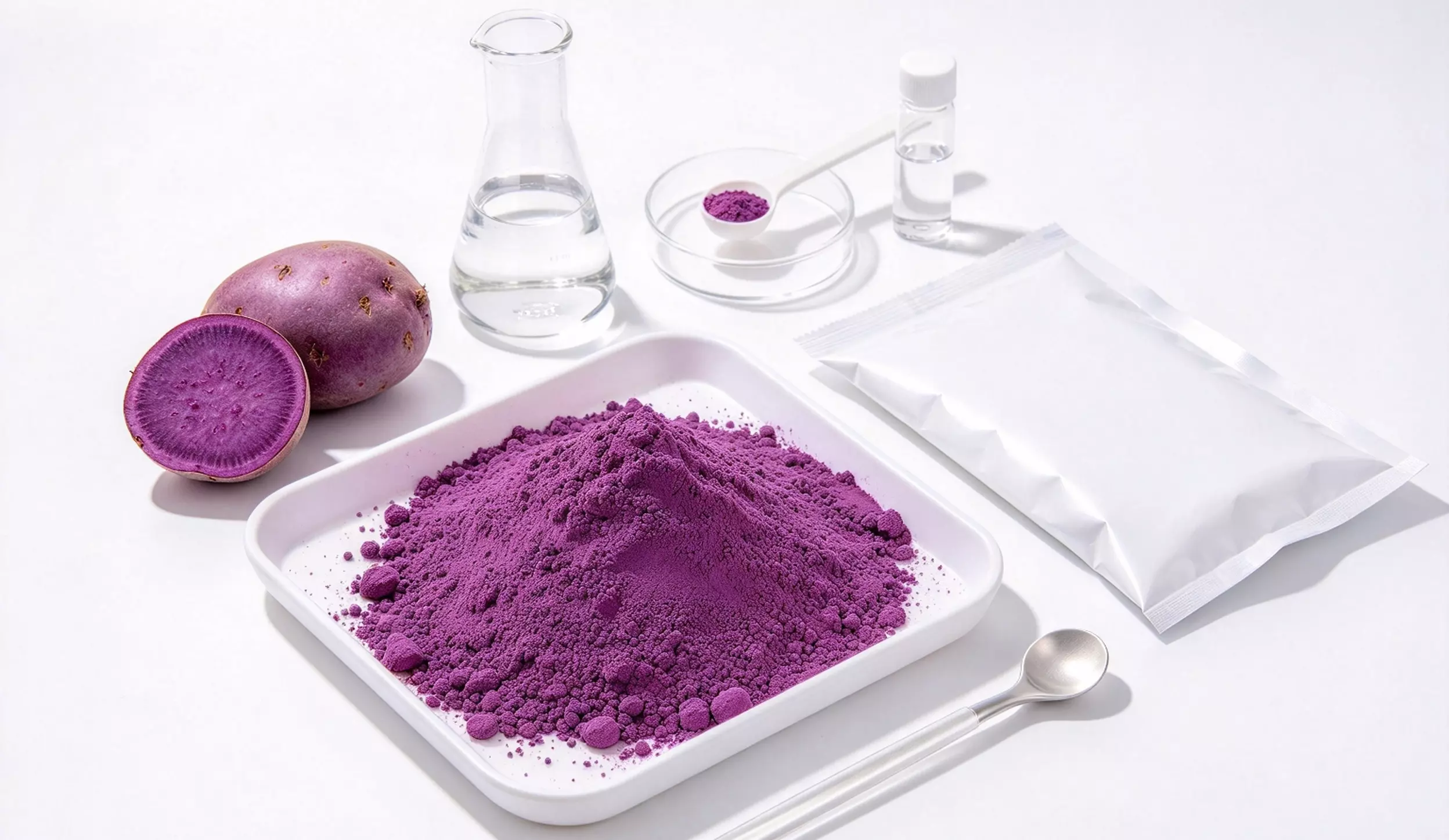
For B2B buyers, supplier selection should be based on documented product quality, communication, and the ability to meet project requirements.
When comparing suppliers, consider these questions:
Can the supplier confirm that the raw material is purple-fleshed potato (Solanum tuberosum)?
Is a detailed technical data sheet available?
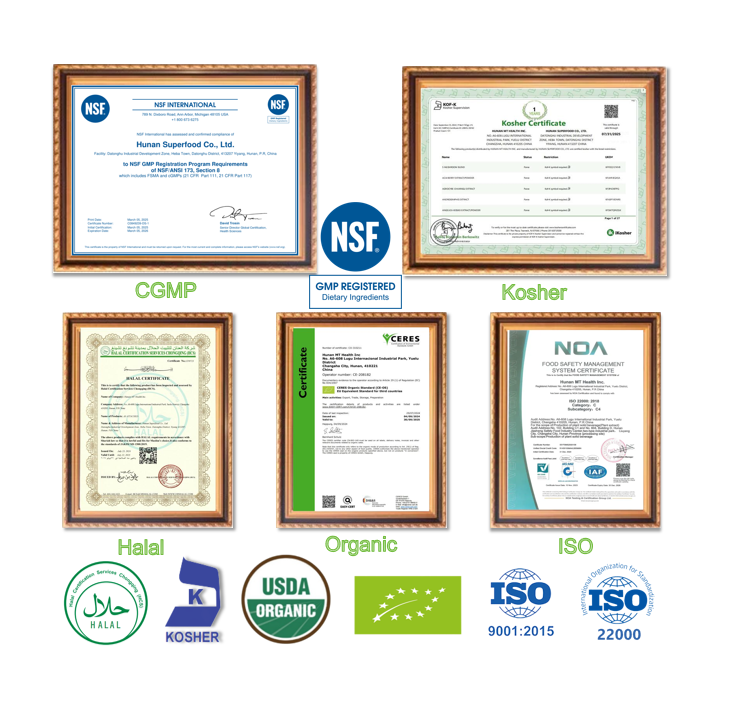
Can the supplier provide a batch-specific Certificate of Analysis (COA)?
Are relevant microbiological and contaminant test results available?
Can the supplier provide samples for laboratory and production trials?
Are packaging, minimum order quantity, lead time, and export documentation clearly specified?
Buyers should also confirm whether the product is pure purple potato powder or a formulation containing carriers or other ingredients. This distinction can affect ingredient labeling, formulation calculations, and purchasing decisions.
1. Bread and Flour-Based Products
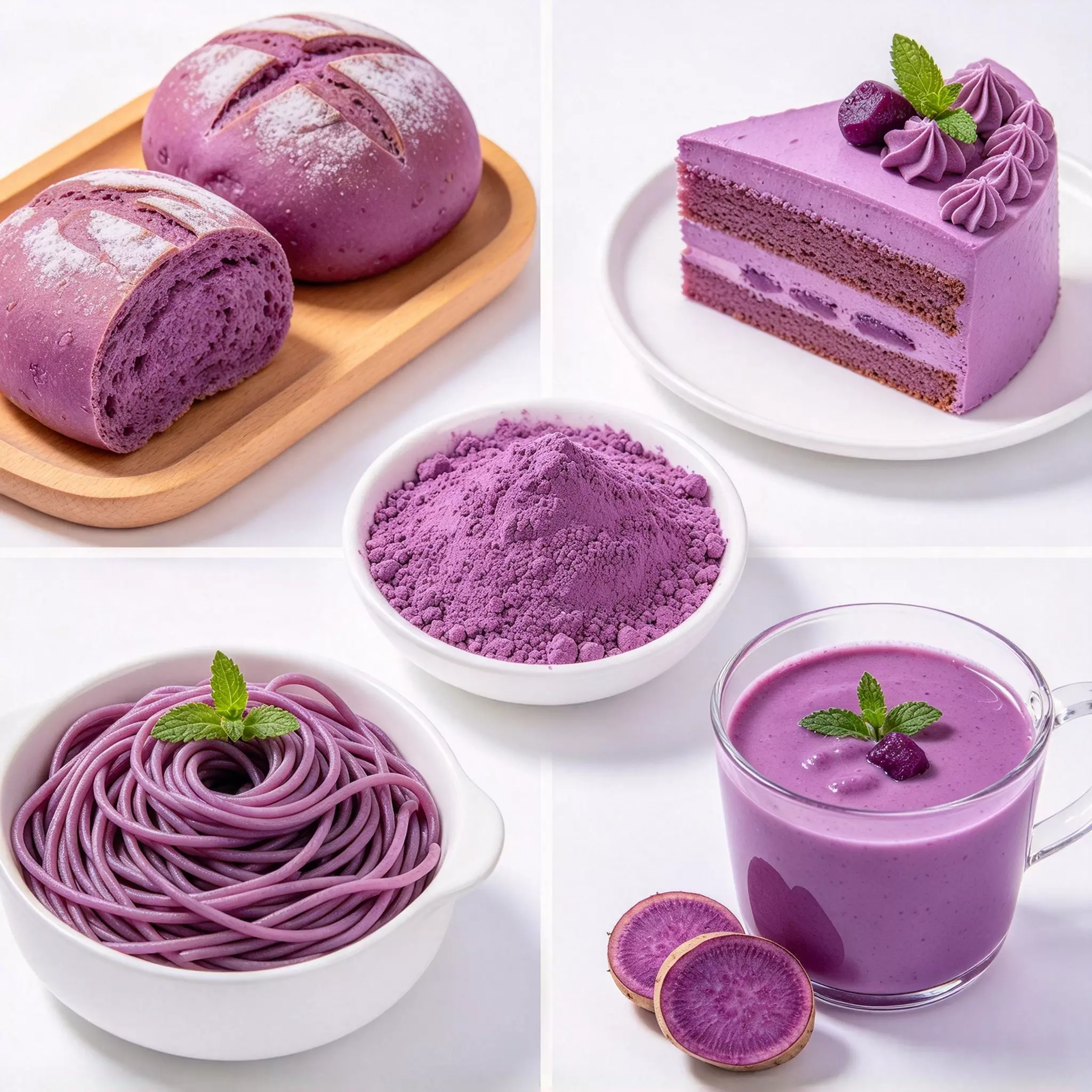
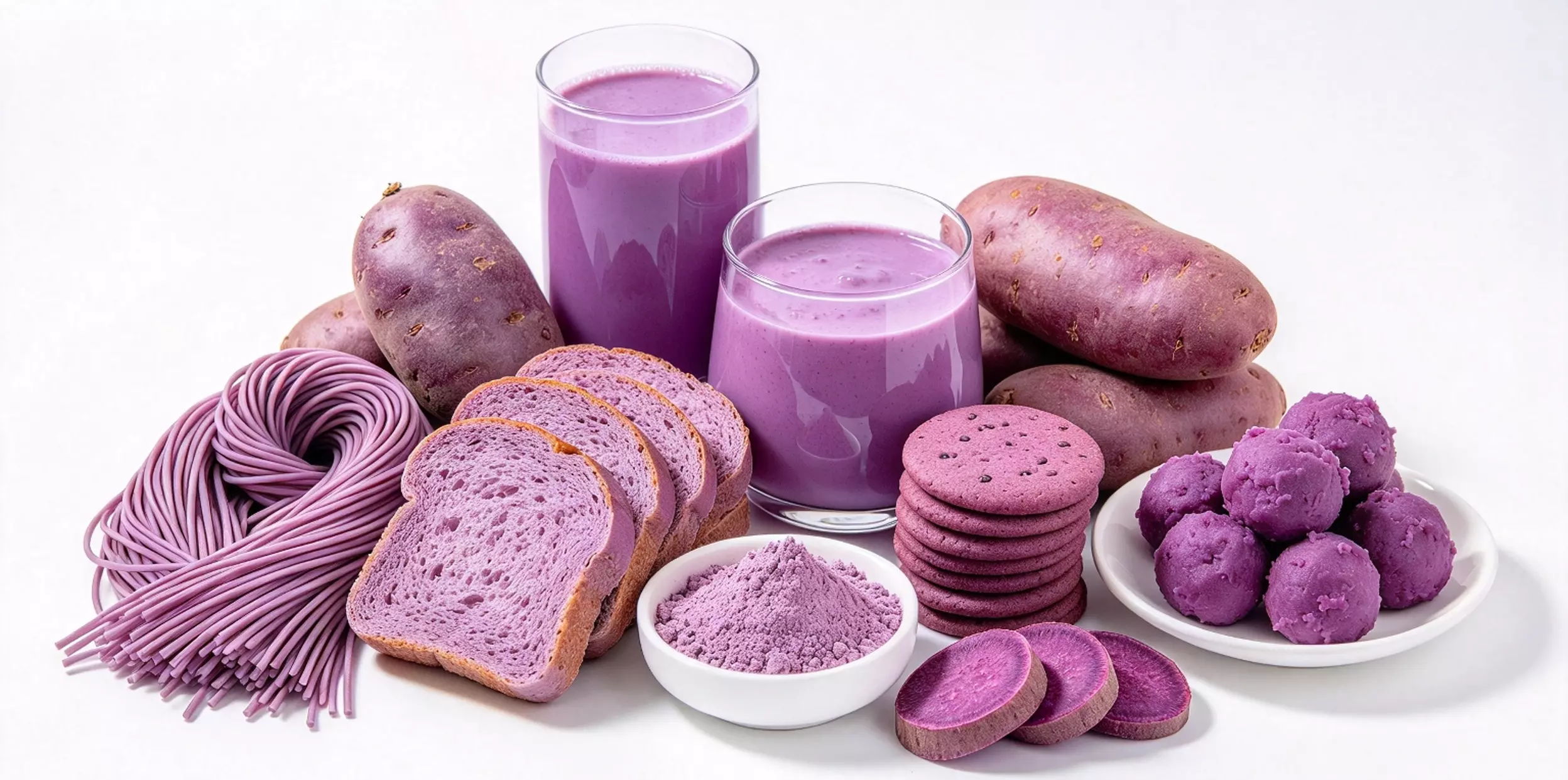
Purple potato powder can be evaluated in bread, rolls, flatbreads, crackers, and other flour-based products. Depending on the addition rate, it may influence the finished product's color, moisture balance, and texture.
For industrial bakeries, formulation trials should examine dough consistency, mixing behavior, baking performance, and the appearance of the finished product. Adjustments to water content or other ingredients may be necessary.
2. Potato Snacks and Savory Foods
The ingredient can be explored in crackers, savory biscuits, snack coatings, and selected potato-based snack formulations. It may support product concepts built around purple vegetables or visually distinctive snack varieties.
Manufacturers should consider the interaction between the powder and other ingredients, particularly where extrusion, frying, or high-temperature processing is involved.
3. Pasta, Noodles, and Specialty Staples
Food developers can investigate purple potato powder in pasta, noodles, dumpling wrappers, and other specialty staple foods. It may contribute color and vegetable-derived solids to the recipe.
The appropriate formulation depends on the desired texture, cooking stability, water absorption, and color retention. Pilot production can help determine whether the ingredient meets the required processing standards.
4. Soup Bases and Convenience Foods
Purple potato powder may be suitable for selected instant soup mixes, dry meal bases, and convenience food formulations. Its starch content and water absorption characteristics can influence the consistency of the reconstituted product.
Before commercializing a formulation, manufacturers should evaluate mixing behavior, hydration time, flavor, and finished texture.
5. Specialty Food and Private-Label Products
Private-label manufacturers can explore purple potato powder for differentiated vegetable-based product lines, including specialty bakery mixes, snack concepts, and other formulated foods.
The ingredient can be assessed as part of a broader product development strategy that considers target consumers, ingredient declarations, manufacturing costs, and market-specific regulatory requirements.
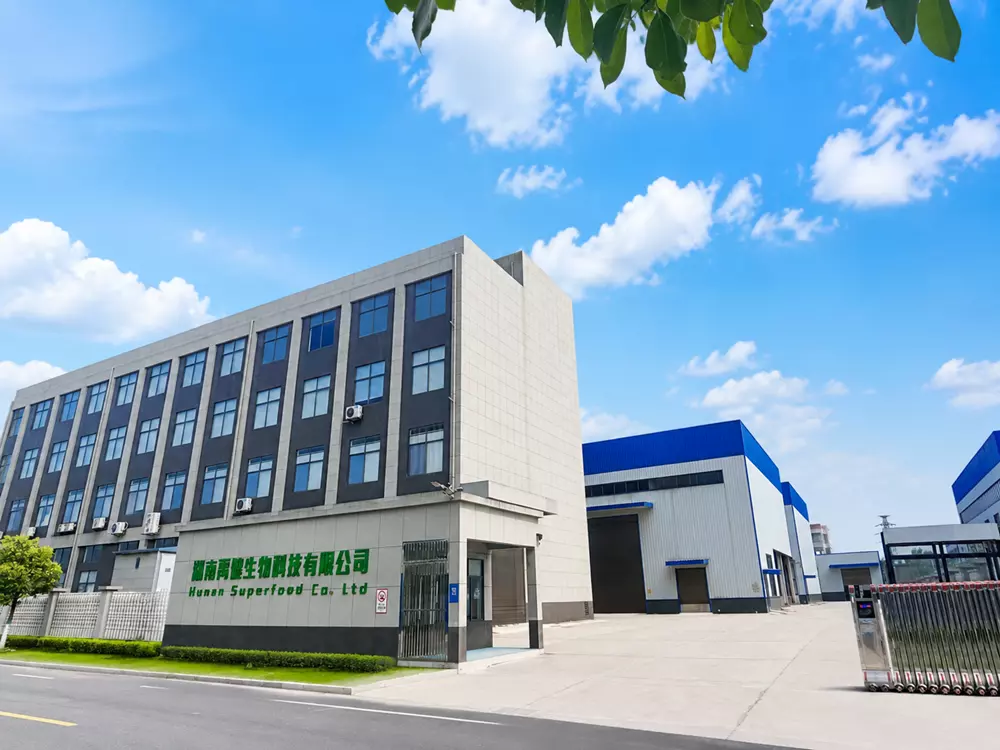
Hunan MT Health ist bestrebt, die Bedürfnisse der Kunden zu verstehen, Marktveränderungen vorherzusehen, innovative Lösungen anzubieten, kreatives Denken und fortschrittliche Technologie einzusetzen, um den Service zu verbessern. Sie sind herzlich eingeladen, unser Unternehmen jederzeit zu besuchen!
Chat
Hinterlassen Sie Ihre Nachricht
Senden Sie Ihre Anfrage


 DE
 EN
 ZH
 AR
 TH
 EN_GB
 DA
 ES