

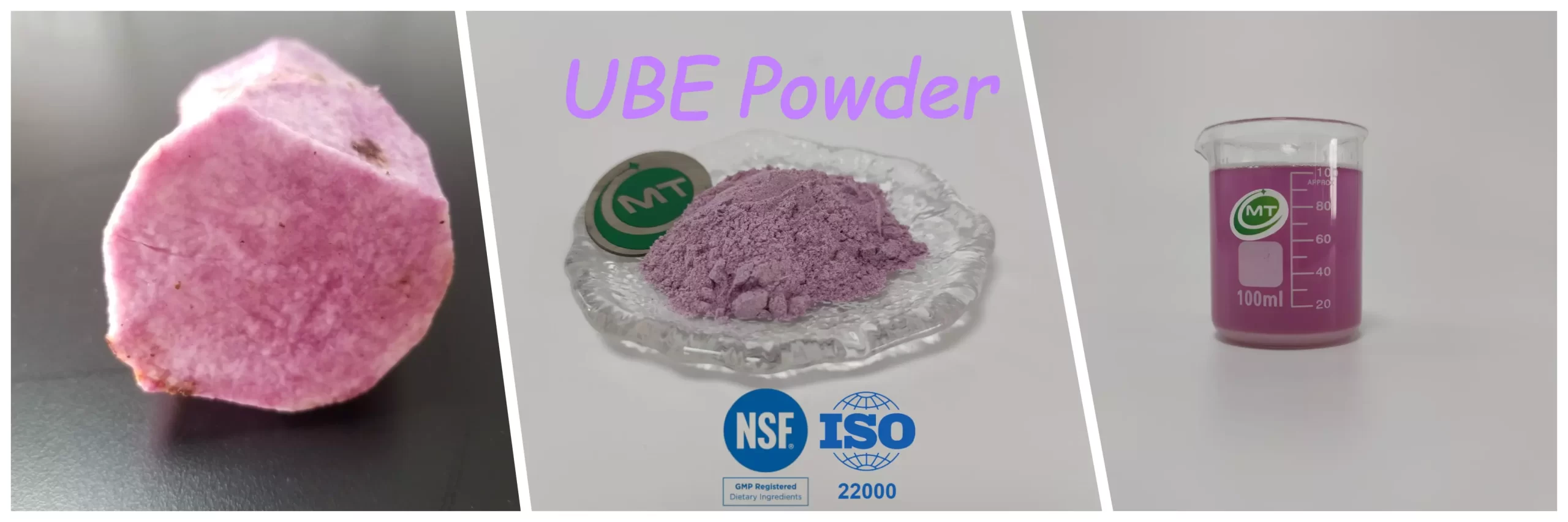
Purple Yam Powder /UBE Powder
Dioscorea alata
Root
Powder
Light purple powder
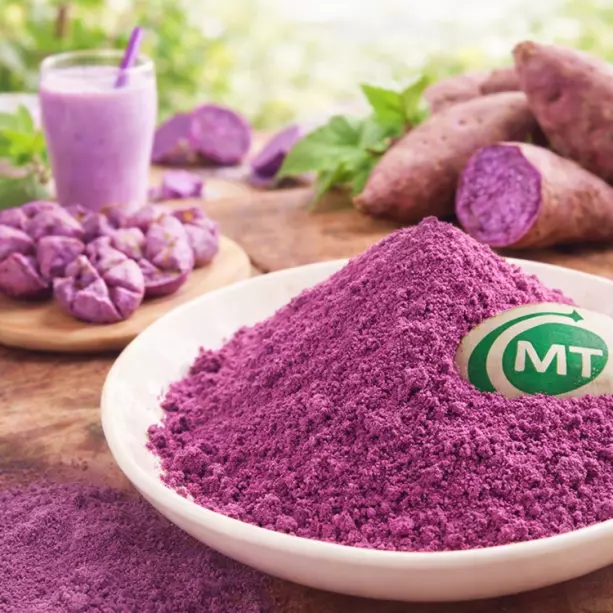
Ube Powder is a naturally colorful food ingredient made from purple yam (Dioscorea alata). Known as “ube” or “purple yam,” it has long been used in Filipino and Southeast Asian cuisine and is now becoming increasingly popular in international food and beverage products.
With its naturally purple appearance, mild sweet and nutty flavor, and versatile formulation potential, Ube Powder offers food manufacturers an opportunity to develop products that combine visual appeal, distinctive flavor, and a recognizable plant-based ingredient. Purple-fleshed Dioscorea alata is also known to contain anthocyanins and other phytochemicals, although the levels can vary considerably by cultivar and processing method.
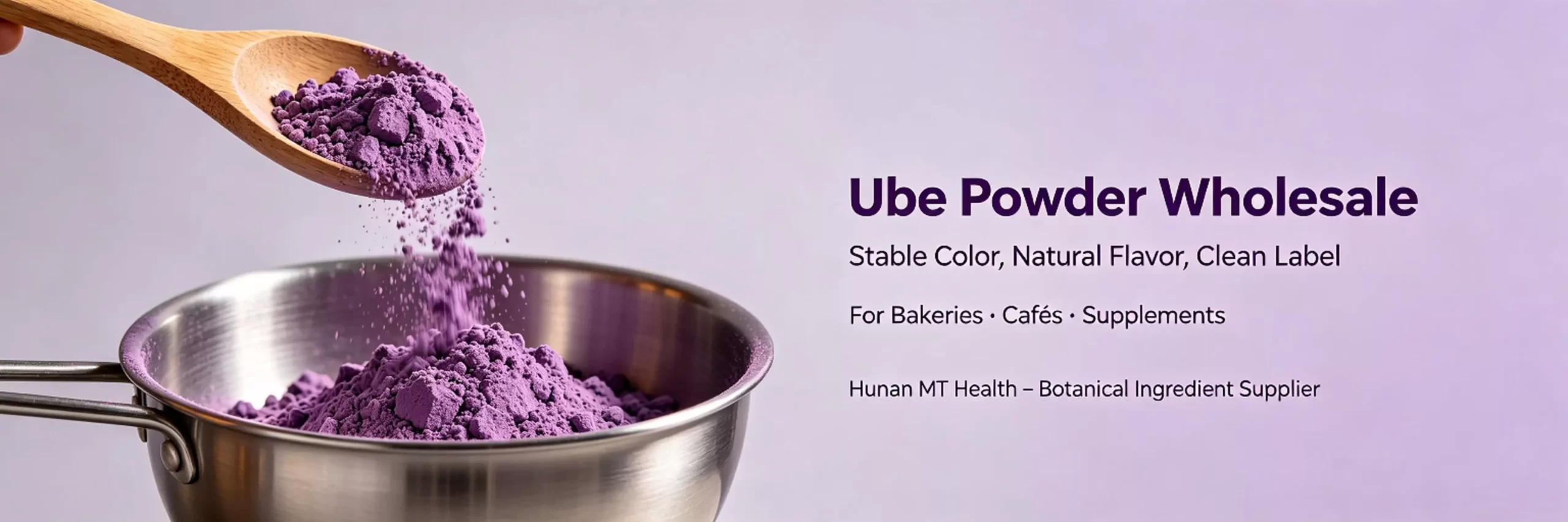
At Hunan MT Health, Ube Powder is one of our core products. We provide purple yam powder for international B2B customers looking for a reliable ingredient for beverages, bakery products, desserts, and other food applications.
Ube Powder is a powdered form of purple yam, botanically known as Dioscorea alata.
The fresh purple yam is processed through appropriate cleaning, drying, and milling procedures to produce a convenient powdered ingredient. Compared with fresh tubers, the powder is easier to handle, transport, store, and incorporate into commercial formulations.
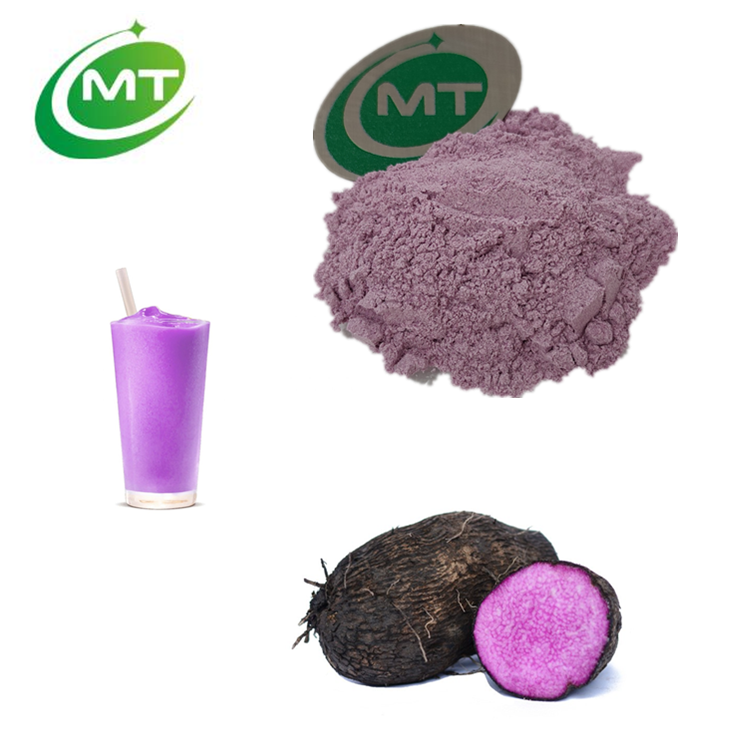
Ube is sometimes confused with taro or purple sweet potato, but they are different plants with different botanical identities and flavor profiles. Ube specifically refers to purple yam, Dioscorea alata.
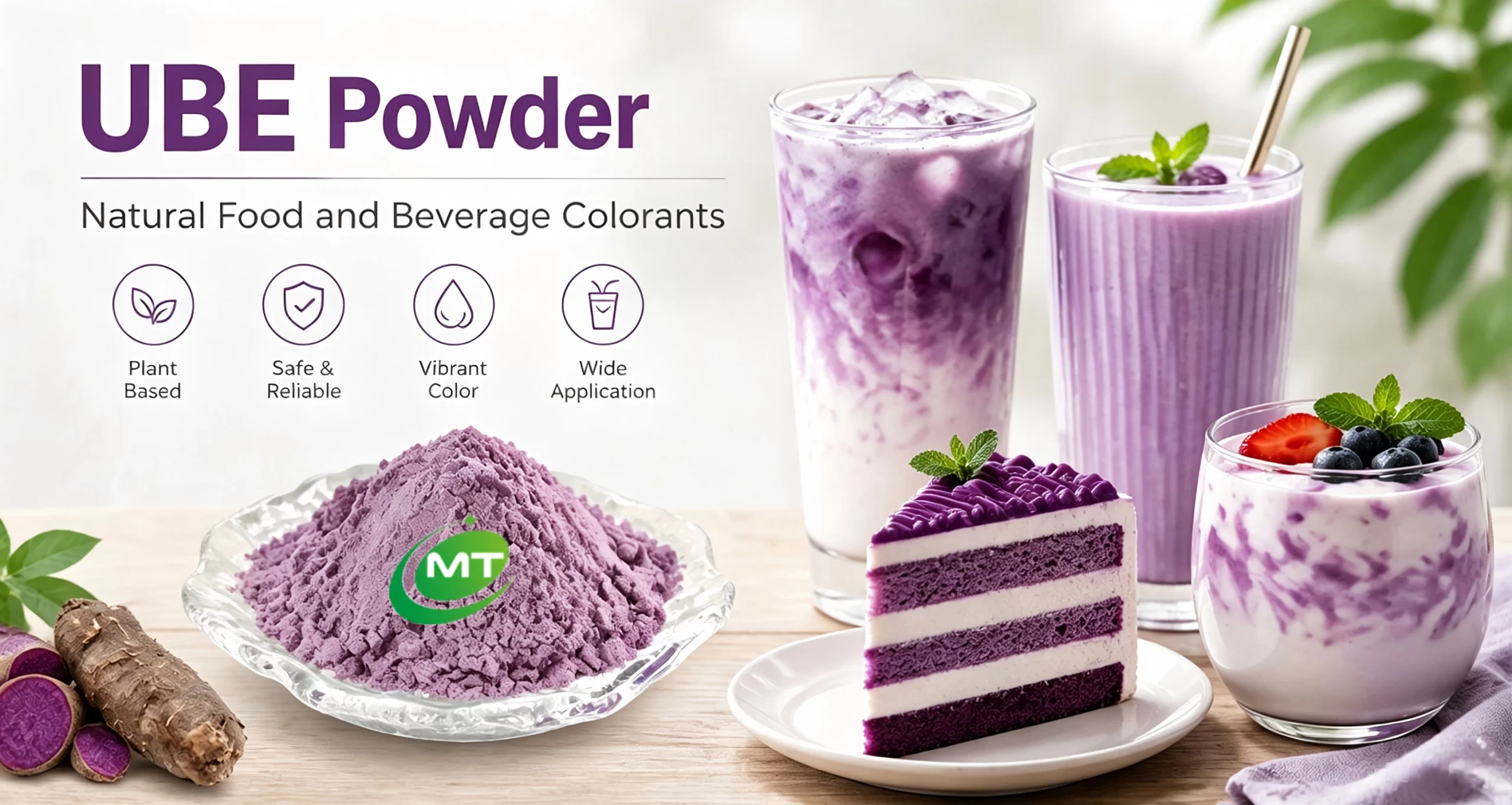
Ube has moved beyond its traditional culinary roots and is increasingly appearing in cafés, bakeries, dessert shops, and packaged food products around the world.
One reason is simple: Ube offers both flavor and visual identity in one ingredient.
Its naturally purple appearance can make products stand out on retail shelves and social media, while its characteristic flavor gives manufacturers an alternative to more conventional vanilla, chocolate, or fruit profiles.
Current commercial applications include ube lattes, smoothies, ice cream, cakes, cookies, pastries, cheesecake, and other desserts.
| Items | Specifications | Test Methods |
| Appearance & Color Odor & Taste
Mesh Size |
Fine Purple powder
Characteristic NLT 90% through 60 mesh |
Visual
Organoleptic 60 Mesh Screen |
| Moisture Content
Ash Content |
NMT 12.0%
NMT 12.0% |
5g / 105℃ / 2hrs
2g / 525℃ / 3hrs |
| Shelf Life | 2 years | |
| Remarks | Store in a well-closed container away from moisture, heat and strong sun.
Packing: Fiber drums and two plastic-bags inside. 25kg/drum. |
|
One of the most distinctive characteristics of purple yam is its natural violet color.
Purple-fleshed Dioscorea alata contains anthocyanins, a group of naturally occurring pigments responsible for much of its purple coloration. Research has identified several anthocyanin compounds in purple yam, although the pigment profile varies between cultivars.
For food manufacturers, this creates opportunities to develop visually distinctive products without relying solely on artificial color systems.
Important: the color intensity of Ube Powder depends on the raw material, cultivar, processing method, and storage conditions. It should not automatically be treated as a standardized natural food color unless the specific product has been manufactured and tested for that purpose.
Ube has a characteristic flavor that is difficult to replicate with conventional fruit powders.
Depending on the variety and processing method, its flavor can be described as:
Mildly sweet
Earthy
Nutty
Creamy
Subtly vanilla-like
This makes Ube particularly attractive for products where flavor differentiation is as important as color.
Fresh purple yam can present challenges for commercial food production because of its moisture content, handling requirements, storage limitations, and processing needs.
Ube Powder provides a more convenient dry ingredient format.
Manufacturers can:
Measure the ingredient accurately
Store it more conveniently
Blend it with other dry ingredients
Incorporate it into premixes
Develop standardized commercial formulations
This makes powdered ube particularly practical for industrial food production.
Purple yam naturally contains anthocyanins and phenolic compounds. Scientific literature has identified a variety of anthocyanins and other phytochemicals in Dioscorea alata.
These compounds are one reason purple yam has attracted research interest as a functional food ingredient.
However, the concentration of these compounds can vary significantly depending on the cultivar, growing conditions, processing method, and storage conditions. Therefore, specific antioxidant or nutritional claims should be based on the actual product's analytical data rather than generalized claims about purple yam.
Ube Powder is particularly suitable for products where natural color, recognizable flavor, and plant-based positioning are important.
Ube has become a popular café ingredient.
Ube Powder can be incorporated into:
Ube lattes
Iced ube drinks
Ube milk
Smoothies
Milkshakes
Ube bubble tea
Specialty café beverages
The combination of a creamy beverage and purple yam creates a visually distinctive product that works well for modern café menus.
Ube Powder can be incorporated into:
Ube cakes
Cupcakes
Cookies
Muffins
Bread
Pancakes
Waffles
Pastries
Cheesecake
It can contribute both flavor and natural purple coloration to bakery formulations.
Ube is especially well suited to frozen desserts.
Potential applications include:
Ube ice cream
Gelato
Frozen yogurt
Ube soft serve
Dessert sauces
Frozen dessert bases
Ube's creamy, mildly sweet flavor profile pairs well with dairy and plant-based milk systems.
Ube Powder can be used in:
Gummies
Candy
Chocolate
Cream fillings
Marshmallow products
Dessert coatings
Its distinctive color provides product developers with an additional visual element.
For beverage manufacturers, Ube Powder can be incorporated into:
Smoothie powders
Meal replacement blends
Nutrition drink mixes
Plant-based beverage powders
Fruit and vegetable powder blends
The flavor can also be combined with coconut, vanilla, banana, coffee, or other complementary ingredients.
Ube Powder in Clean-Label Product Development
The clean-label movement has increased interest in recognizable food ingredients and naturally derived colors.
Ube Powder can support this positioning when the actual product specification meets the manufacturer's clean-label requirements.
For example, a 100% purple yam powder can provide both a recognizable food ingredient and its natural color without requiring artificial purple coloring.
However, B2B buyers should always check the ingredient declaration, processing method, carrier content, and applicable food regulations before making a “natural color” or “clean label” claim.
Ube and purple sweet potato are often confused because both can produce purple-colored foods. However, they are botanically different.
| Feature | Ube Powder | Purple Sweet Potato Powder |
|---|---|---|
| Botanical source | Dioscorea alata | Ipomoea batatas |
| Common name | Purple yam | Purple sweet potato |
| Flavor | Mild, earthy, nutty | Sweet, earthy |
| Typical positioning | Ube flavor + purple color | Sweet potato + purple color |
| Common applications | Desserts, lattes, bakery | Beverages, bakery, noodles, snacks |
For brands specifically looking for the authentic ube identity, the botanical source should be clearly specified as Dioscorea alata.
At Hunan MT Health, Ube Powder is one of our core product categories. We understand that B2B customers need more than an attractive ingredient—they need consistent specifications, reliable supply, documentation, and responsive communication.
Quality-Focused Production
We focus on raw material selection and controlled processing to support consistency in:
Color
Flavor
Powder fineness
Moisture
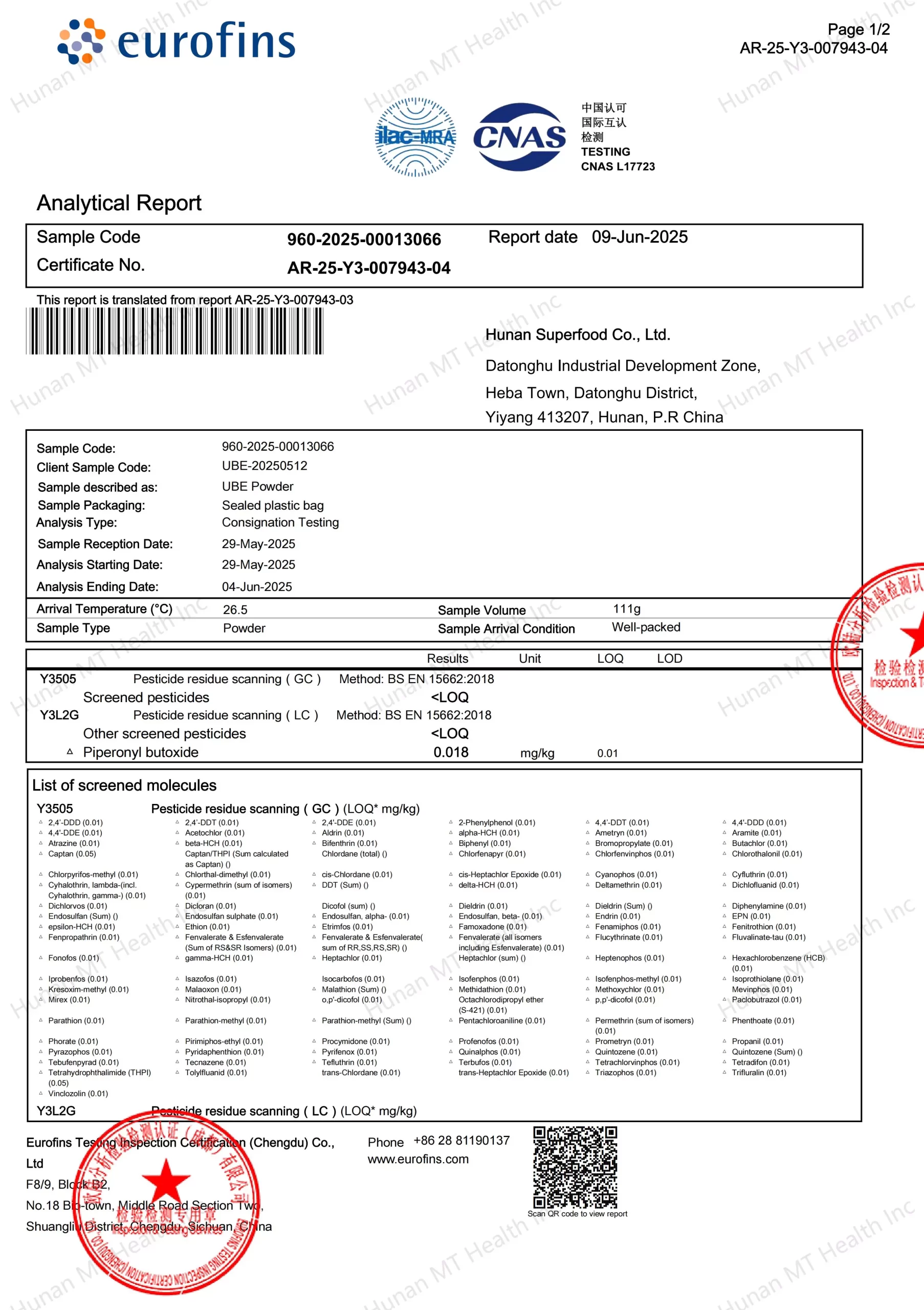
Microbiological quality
B2B Supply Capability
Our Ube Powder is suitable for:
Food manufacturers
Beverage manufacturers
Bakery companies
Dessert brands
Ingredient distributors
Café and beverage product developers
Private-label brands
Flexible Product Solutions
Different applications require different specifications. We can discuss requirements related to:
Particle size
Packaging
Product specifications
Application requirements
Bulk purchasing
Customers can request relevant technical documentation and product samples for evaluation before commercial production.
Not all Ube Powders are identical. Before purchasing, B2B buyers should consider several factors:
1. Botanical Identity
Confirm that the product is derived from Dioscorea alata if authentic ube is required.
2. Color Requirement
If color is an important part of the formulation, request information about the product's color characteristics and analytical specifications.
3. Flavor Profile
Different varieties and processing methods can produce different flavor intensity and aroma.
4. Powder Characteristics
Particle size, moisture, flowability, and dispersibility can affect processing performance.
5. Ingredient Declaration
Check whether the product is pure purple yam powder or contains carriers, sweeteners, flavors, or other ingredients.
This information helps manufacturers select a Ube Powder that actually fits their formulation instead of choosing solely based on price.
Ube combines three commercially attractive characteristics:
Recognizable botanical identity + distinctive flavor + naturally purple appearance.
That combination gives product developers multiple ways to create differentiation.
Instead of using Ube simply as a color ingredient, manufacturers can position it as a complete flavor and ingredient concept—for example, an ube latte, ube ice cream, ube cheesecake, or ube bakery line.
This approach can help brands create products that are easier to communicate to consumers while connecting traditional Southeast Asian food culture with modern global food trends.
Looking for a reliable Ube Powder supplier for your next food or beverage project?
Hunan MT Health supplies Purple Yam Powder for B2B customers seeking a dependable source of Dioscorea alata ingredients.
Our Ube Powder can be considered for:
Ube beverages
Bakery products
Ice cream and desserts
Confectionery
Smoothies
Nutrition powders
Food ingredient blends
We can provide samples, product specifications, COA, packaging information, and bulk quotations according to your requirements.
Contact Hunan MT Health today to discuss your Ube Powder sourcing needs and develop a reliable purple yam ingredient solution for your market.
Hunan MT Health ist bestrebt, die Bedürfnisse der Kunden zu verstehen, Marktveränderungen vorherzusehen, innovative Lösungen anzubieten, kreatives Denken und fortschrittliche Technologie einzusetzen, um den Service zu verbessern. Sie sind herzlich eingeladen, unser Unternehmen jederzeit zu besuchen!
Chat
Hinterlassen Sie Ihre Nachricht
Senden Sie Ihre Anfrage


 DE
DE  EN
EN  ZH
ZH  AR
AR  TH
TH  EN_GB
EN_GB  DA
DA  ES
ES