Sep 20, 2026
The global food and beverage industry is undergoing a fundamental shift in how color and functional ingredients are selected. Consumers are no longer satisfied with artificially colored products. They want simpler ingredient lists, recognizable raw materials, and transparent sourcing stories. This shift has created strong demand for natural, plant-based color ingredients, and purple sweet potato powder has emerged as one of the most attractive options for food and beverage manufacturers.
Purple sweet potato powder is made from purple-fleshed sweet potatoes, usually through washing, peeling, cutting, drying, and milling. It provides a distinctive purple-to-violet color, a mild sweet flavor, and a vegetable-based identity that consumers find easier to understand than many synthetic or highly processed color additives. For brands, this makes it a powerful tool for clean-label positioning.
But purple sweet potato powder is more than just a natural colorant. It also contains anthocyanins, the same natural pigments found in berries, grapes, and red cabbage. These compounds are widely associated with antioxidant properties, and they help food manufacturers create products that are both visually appealing and functionally interesting. As consumer interest in plant-based, natural, and functional foods continues to rise, purple sweet potato powder is moving from a niche ingredient into mainstream food and beverage development.
This article explores why purple sweet potato powder is gaining popularity, how it fits into clean-label and natural color trends, what role anthocyanins play, and what food and beverage brands should consider when using it in commercial production.
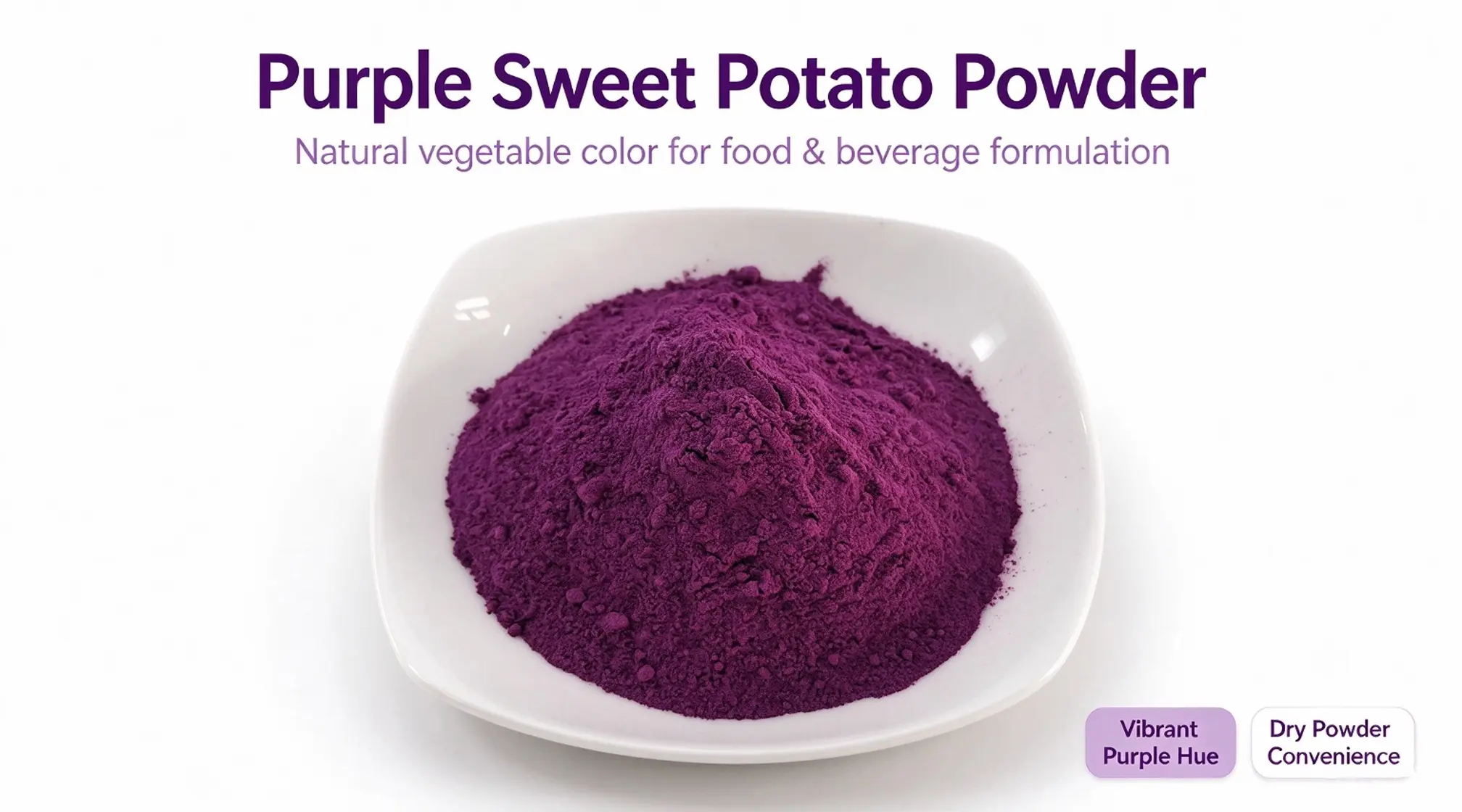
For decades, artificial colors were widely used in processed foods because they were inexpensive, stable, and capable of delivering bright, consistent hues. Today, that model is changing rapidly. Consumers, regulators, and food companies are all looking for alternatives that are perceived as safer, more natural, and more aligned with modern eating habits.
The reasons behind this shift are clear. Many consumers now read ingredient labels more carefully. They question long chemical names, synthetic additives, and colorings that appear artificial or overly processed. This has created market pressure for brands to replace synthetic colors with natural or nature-identical alternatives, especially in products marketed to health-conscious buyers, families, and younger consumers.
At the same time, regulatory requirements around food colors have become stricter in many markets. Certain artificial colors are subject to mandatory labeling, restrictions, or even bans in some regions. This has pushed food manufacturers to reformulate existing products and search for more compliant color solutions.
Purple sweet potato powder fits this transition well because it offers a vegetable-based source of purple color. Unlike some highly processed color extracts, it carries a simple, recognizable ingredient identity. For consumers, “purple sweet potato powder” is easier to accept than a synthetic color name. For manufacturers, it offers a practical way to improve label appeal without completely reinventing the product formulation.
There are several ways to add purple color to food and beverages, including grape extract, red cabbage extract, elderberry juice, black carrot concentrate, and synthetic colorants. Purple sweet potato powder stands out because it combines color, flavor, convenience, and label friendliness in one ingredient.
First, it is a vegetable-based powder. This gives it a clear identity in the ingredient list. Many consumers understand sweet potato as a common, wholesome food, which can make the final product feel less processed.
Second, it has a relatively mild flavor. Purple sweet potato powder contributes a subtle sweetness and earthy note, but it is often less aggressive than fruit-based color ingredients. This makes it easier to incorporate into a wider range of products without overpowering the base flavor.
Third, it is available in dry powder form. Dry ingredients are easier to transport, store, and dose than liquid concentrates or juices. They also integrate well into powdered drink mixes, instant products, bakery blends, and dry snack formulations.
Fourth, purple sweet potato powder contains anthocyanins, which adds a functional dimension beyond simple coloration. Brands can communicate an “anthocyanin-containing” or “natural antioxidant” story, which is valuable in functional beverages, nutritional powders, and premium health-oriented products.
Finally, purple sweet potato powder can provide an attractive violet hue that is distinctive in the marketplace. Purple products are often associated with premium, exotic, or health-enhancing positioning, which helps brands stand out on crowded shelves.
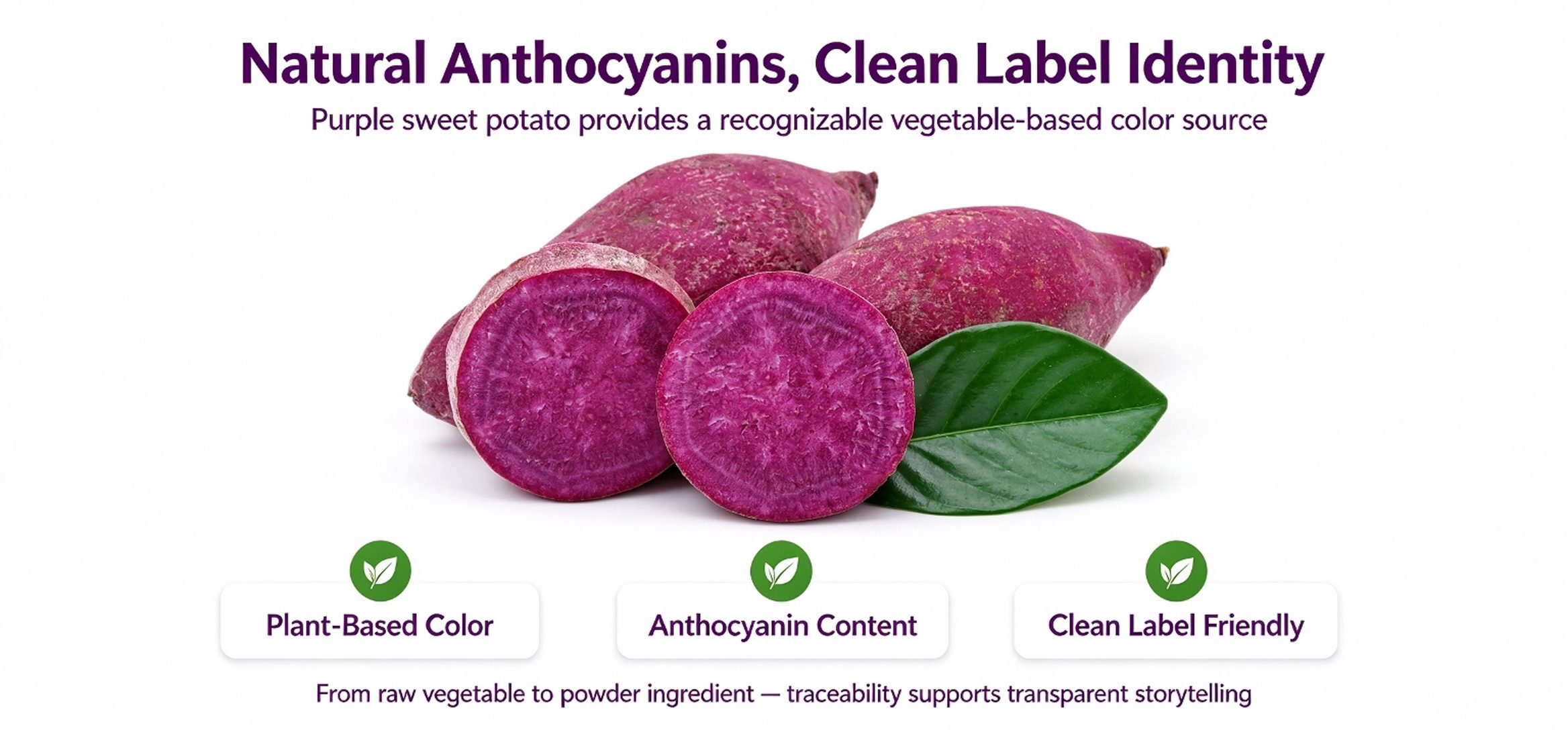
The purple color in purple sweet potato powder comes from anthocyanins. Anthocyanins are a class of water-soluble natural pigments found in many plants, fruits, and vegetables. They are responsible for many of the red, purple, and blue colors seen in nature.
In food ingredients, anthocyanins are valued for two main reasons. First, they provide natural color without the need for synthetic additives. Second, they are widely associated with antioxidant properties, which gives food manufacturers an opportunity to add functional value to their products.
Purple sweet potato contains several anthocyanin compounds, including cyanidin and peonidin derivatives. These compounds are naturally present in the purple flesh of the root vegetable. When the sweet potato is processed into powder, these pigments remain in the finished ingredient, giving the powder its characteristic purple color.
For food and beverage formulators, anthocyanin content is important for more than just color. It can also serve as a quality marker. Higher anthocyanin content usually means stronger color potential and greater functional value, although this depends on the variety, growing conditions, processing method, and final purity of the powder.
However, anthocyanins are not always stable in every food system. They can be sensitive to pH, heat, light, oxygen, and certain processing conditions. This means that food manufacturers need to consider the application environment carefully. For example, a purple sweet potato powder that works well in a dry mix may behave differently in a high-heat baked product or a low-pH beverage.
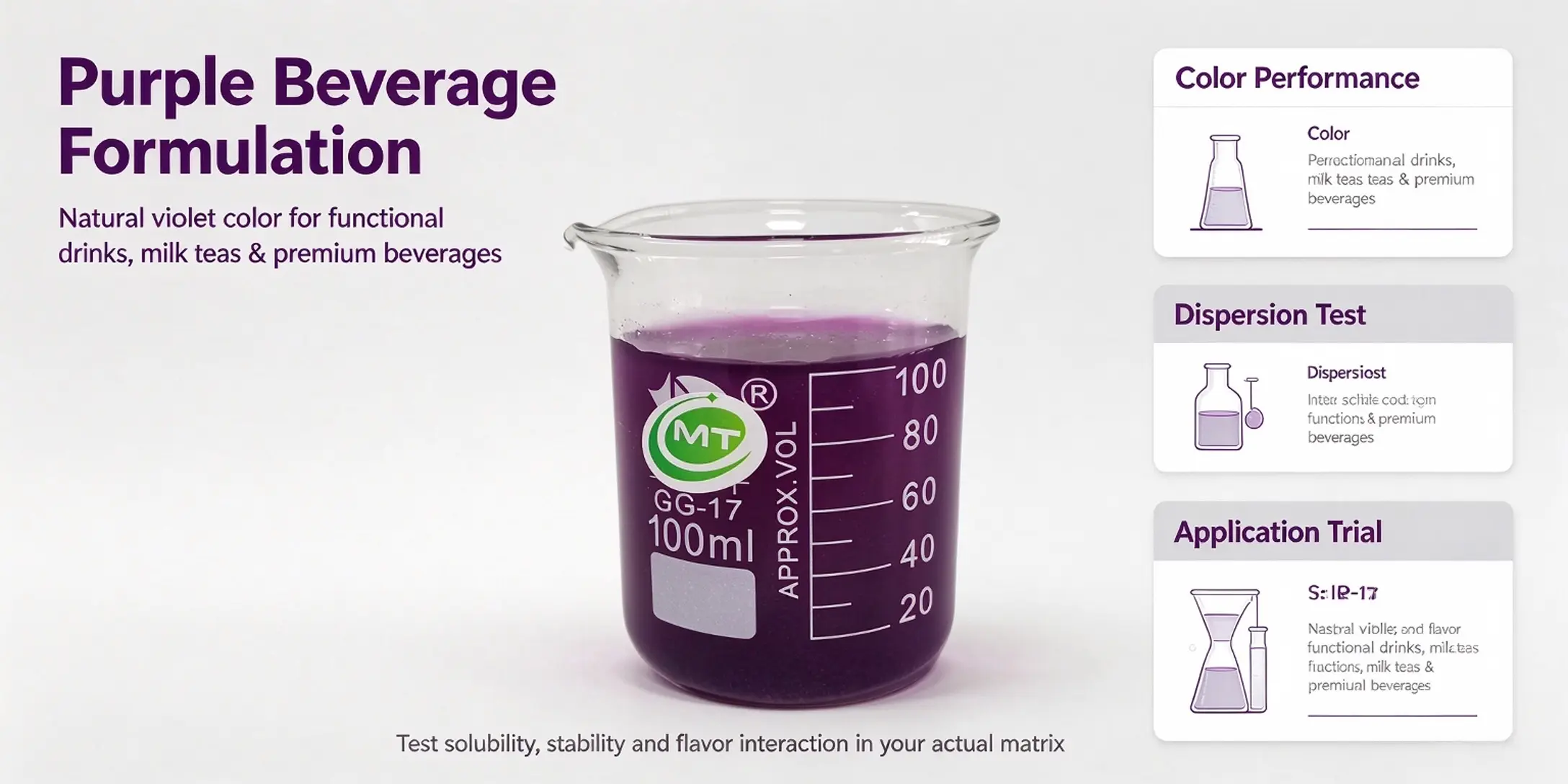
This is why it is important for brands to test purple sweet potato powder in their actual product matrix before full-scale production. Color strength, stability, solubility, flavor interaction, and shelf-life performance must all be verified under real manufacturing conditions.
Clean label means different things to different people, but in practice, it usually involves simpler ingredient lists, more recognizable raw materials, fewer artificial additives, and clearer communication about where ingredients come from.
Purple sweet potato powder fits the clean-label trend particularly well because it is a whole vegetable-derived powder. Instead of listing a synthetic color or a highly processed additive, food manufacturers can list “purple sweet potato powder” or “sweet potato powder,” which most consumers see as natural and food-like.
This is a significant commercial advantage. Many modern consumers do not trust ingredients they cannot pronounce or do not recognize. When they see “purple sweet potato powder” on a label, they tend to interpret it as a simple, plant-based ingredient. This can improve brand perception even if the final product is still a processed food or beverage.
Clean label is also about transparency. Brands that use purple sweet potato powder can tell a clearer story about the ingredient’s origin, processing method, and natural color properties. This storytelling works especially well in functional beverages, premium snacks, organic-oriented products, and plant-based food lines.
It is important to note, however, that clean label does not mean lower quality control. Even natural ingredients must meet food safety standards. Purple sweet potato powder should still be tested for heavy metals, microorganisms, pesticide residues, moisture, and other quality parameters. Natural does not automatically equal safer or better. It simply means the ingredient has a more consumer-friendly identity.
Purple sweet potato powder is a versatile ingredient that works across many food and beverage categories. Its dry powder form, natural purple color, and mild flavor make it suitable for both small-batch product development and large-scale manufacturing.
Functional Beverages
One of the fastest-growing applications is functional beverages. Purple sweet potato powder can be used in plant-based drinks, nutritional shakes, antioxidant beverages, wellness shots, and colored premium drinks. The purple color helps products stand out, while the anthocyanin content adds a functional story.
Instant Powders and Meal Replacements
Purple sweet potato powder integrates easily into dry powder formulations. It can be used in breakfast drinks, smoothies, meal replacement powders, and nutritional blends. Because it is already a dry ingredient, it often requires less processing than liquid color concentrates.
Milk Tea and Flavored Milk Drinks
The purple trend is especially visible in the milk tea and flavored milk segment. Purple sweet potato powder can create attractive violet milk drinks, creamy tea beverages, and limited-edition seasonal products. Its mild sweetness also complements dairy and plant-based milk bases.
Bakery and Confectionery
In bakery products, purple sweet potato powder can be added to bread, cakes, cookies, muffins, fillings, and doughs. It provides natural color and a subtle vegetable note. In confectionery, it can be used in candies, gummies, icings, and decorative coatings, although heat and stability limitations must be considered.
Snacks and Puffed Foods
Purple sweet potato powder is also used in snacks such as chips, crackers, puffed snacks, vegetable crisps, and functional snack bars. The purple color makes these products more visually interesting, while the vegetable origin supports natural and healthy positioning.
Ice Cream, Yogurt, and Desserts
In frozen desserts and dairy products, purple sweet potato powder can create distinctive purple ice cream, yogurt, smoothie bowls, custards, and plant-based desserts. It works particularly well in creamy systems where the purple color is visually striking.
While purple sweet potato powder offers many advantages, it is not a “set it and forget it” ingredient. Food and beverage manufacturers should test it carefully before full-scale production.
Color Stability
Purple sweet potato color can be sensitive to heat, light, pH, and oxidation. In some applications, the color may fade or change over time. Brands should conduct shelf-life studies to confirm whether the purple hue remains acceptable throughout the product’s expected life.
Solubility and Dispersion
In beverage applications, solubility is critical. Some purple sweet potato powders may form lumps, float on the surface, or create sediment. Formulators should test dispersion speed, clarity, turbidity, and any residue formation in the actual drink system.
Flavor Interaction
Purple sweet potato powder has a mild sweet and earthy flavor. In delicate products, this may influence the final taste. Manufacturers should evaluate whether the ingredient complements or conflicts with other flavors in the formula.
Moisture Control
As a dry powder, purple sweet potato powder must remain properly packaged and stored. High moisture can cause caking, microbial growth, and quality loss. Suppliers should provide clear moisture specifications and storage recommendations.
pH Sensitivity
Anthocyanin-based colors can change color depending on acidity. In some low-pH beverages, purple sweet potato powder may shift toward redder tones. Formulators should test the color under the exact pH conditions of the finished product.
For these reasons, it is essential for brands to run laboratory testing and pilot production trials. A product that looks good in a small glass may not perform the same in a 1,000-liter production tank.
Not all purple sweet potato powder is the same. The quality of commercial material can vary significantly based on the raw sweet potato variety, growing region, harvesting time, processing method, drying temperature, milling standard, and quality control system.
Food and beverage brands should evaluate suppliers based on the following criteria:
Raw Material Origin
High-quality purple sweet potato powder usually starts with good-quality fresh purple sweet potatoes. The origin, variety, harvest season, and agricultural conditions can all affect color, flavor, and safety.
Color Strength
Color strength is one of the most important commercial parameters. Manufacturers should know how much color they can expect per unit of powder, especially if the ingredient is being used primarily for visual appeal.
Anthocyanin Content
Anthocyanin content is a useful functional marker. It helps brands understand the ingredient’s antioxidant potential and can support product claims, provided the claims are truthful and compliant with local regulations.
水分含量
Low moisture is important for stability. High moisture increases the risk of caking, microbial growth, and shorter shelf life.
Particle Size
Particle size affects dispersion, mouthfeel, and mixing behavior. Finer powders generally dissolve and distribute more easily, but this must be balanced with dust control and handling requirements.
Heavy Metals and Microorganisms
Like other plant-based ingredients, purple sweet potato powder can be subject to heavy metal and microbial contamination risks. Suppliers should provide test reports showing compliance with applicable food safety limits.
Pesticide Residues
If the product is intended for international markets, pesticide residue screening is important. Buyers should request reports that cover common agricultural chemicals and confirm alignment with destination market requirements.
Documentation
Reliable suppliers should provide product specifications, COA, heavy metal reports, microbial reports, pesticide residue reports, and any applicable certificates such as Halal, Kosher, organic, or food safety management certificates.
In the market, purple sweet potato powder is sometimes confused with purple sweet potato extract. While they are related, they are not always the same.
Purple sweet potato powder is typically made by drying and milling whole purple sweet potato. It retains more of the whole vegetable’s characteristics, including fiber, mild flavor, and physical properties.
Purple sweet potato extract, by contrast, usually involves additional extraction and purification steps. The anthocyanins or color components may be concentrated into a more refined ingredient. Extracts can offer stronger color intensity and sometimes better stability, but they may also have a different flavor profile and higher cost.
For clean-label positioning, purple sweet potato powder is often preferred because it is simpler and closer to the original vegetable. For applications requiring very strong color or more precise dosing, an extract may be more suitable.
Food brands should clarify which ingredient they are buying, because the price, specification, solubility, color strength, and label statement can all differ.
The demand for natural colors and plant-based ingredients is not a short-term trend. It is driven by long-term changes in consumer behavior, regulatory expectations, and product development strategies.
Consumers are now more interested in “what is inside” their food and beverages. They want ingredients that sound natural, simple, and trustworthy. This benefits whole vegetable powders like purple sweet potato powder, especially when compared to synthetic colorants.
At the same time, the functional beverage market continues to expand. Consumers are looking for drinks that do more than just quench thirst. They want products with visual appeal, functional value, natural positioning, and a clear brand story. Purple sweet potato powder fits this model well because it delivers both color and perceived functionality.
The global violet food trend is also helping. Purple products are often seen as premium, innovative, and health-oriented. This has created opportunities for limited-edition drinks, seasonal launches, and premium product lines that use purple sweet potato powder as a key differentiator.
Purple sweet potato powder is more than a colorful food ingredient. It is a strategic option for food and beverage brands that want to move away from artificial colors, improve label appeal, and tap into the growing demand for plant-based and functional ingredients.
Its natural purple color, anthocyanin content, vegetable origin, and dry powder convenience make it suitable for a wide range of applications, including functional beverages, instant powders, bakery products, snacks, dairy alternatives, and desserts. For brands, it offers an opportunity to create visually striking products while maintaining a simple, consumer-friendly ingredient statement.
However, success depends on proper ingredient selection and formulation control. Not all purple sweet potato powders are equal, and performance can vary significantly depending on quality, processing, and application conditions. Brands should evaluate suppliers carefully, review all necessary documentation, test samples in their own formulations, and verify stability before full-scale production.
As the clean-label and natural color trends continue to grow, purple sweet potato powder is likely to remain an important ingredient in the global food and beverage industry. For brands that use it well, it can help create products that are both visually attractive and commercially competitive.
湖南 MT Health 努力了解客户需求,预测市场变化,提出创新解决方案,采用创造性思维和先进技术来改进更好的服务。欢迎您随时莅临我公司参观指导!
聊天
留言
发送查询


 ZH
ZH  EN
EN  AR
AR  TH
TH  EN_GB
EN_GB  DA
DA  DE
DE  ES
ES