Sep 9, 2026
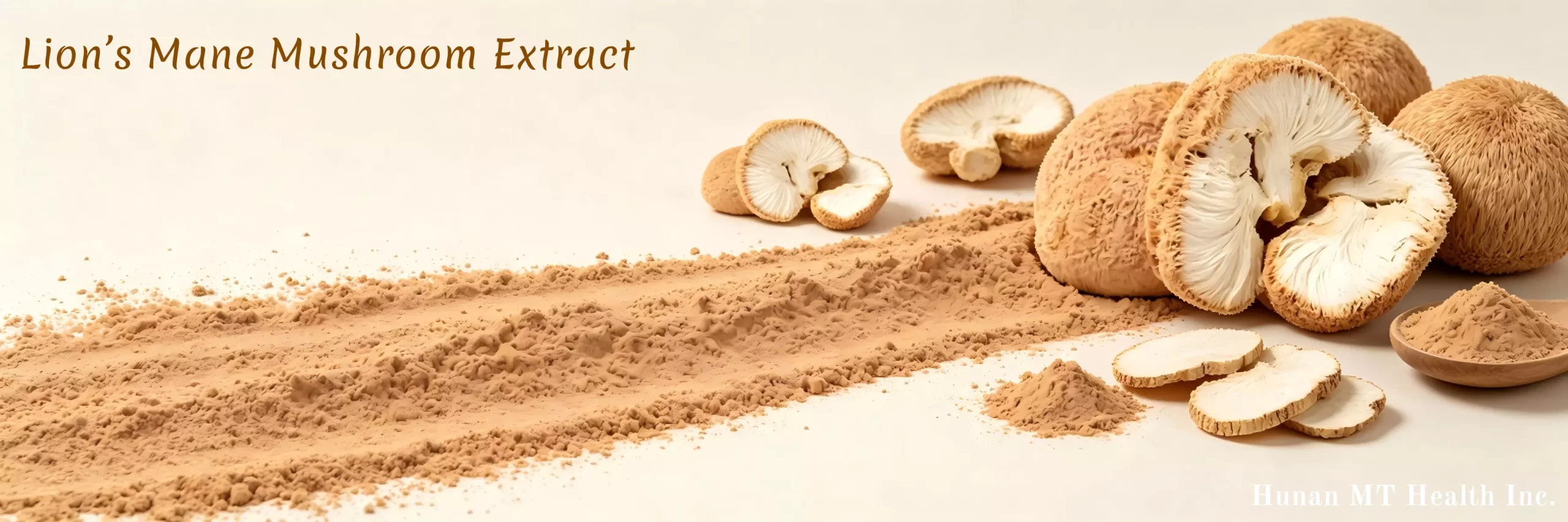
Lion’s Mane mushroom has moved from a traditional culinary and botanical ingredient into one of the most discussed functional mushroom ingredients in the global food, beverage, and supplement markets.
But as the Lion’s Mane category grows, another question is becoming increasingly important for ingredient buyers:
What actually defines a high-quality Lion’s Mane extract?
The answer is more complicated than simply looking at the extract ratio.
For many manufacturers, β-glucan content has become an important specification when evaluating mushroom extracts. In Lion’s Mane (Hericium erinaceus), β-glucans are part of the mushroom’s polysaccharide fraction and have attracted considerable scientific interest.
This is why standardized products such as Lion’s Mane Extract with 20% Beta-Glucans can offer a more informative specification than a generic “Lion’s Mane powder” label.
For B2B buyers, the key is not simply to ask how concentrated an extract is.
It is to ask:
What has actually been concentrated, and how is that characteristic measured?
Beta-glucans are naturally occurring polysaccharides found in various organisms, including mushrooms, cereals, yeasts, and some microorganisms.
In mushrooms, β-glucans are important structural components associated with the fungal cell wall.
Research on Hericium erinaceus has identified polysaccharides containing β-glycosidic linkages, with β-1,3 and β-1,6 structures among the commonly reported configurations.
However, “β-glucan” is not a single uniform molecule.
Different β-glucans can vary in:
Molecular weight
Chain structure
Branching
Glycosidic linkages
Degree of branching
可溶性
Source organism
These structural differences matter because biological activity observed in research can depend on the specific polysaccharide structure.
Therefore, simply seeing the word β-glucan on a label does not tell the whole story.
For ingredient manufacturers, the source, extraction process, analytical method, and specification all deserve attention.
Lion’s Mane contains multiple groups of naturally occurring compounds.
These include:
多糖
β-glucans
Hericenones
Erinacines
Sterols
Phenolic compounds
Other secondary metabolites
The chemical profile can vary depending on whether the ingredient comes from fruiting bodies, mycelium, or other cultivation materials.
Scientific reviews have paid particular attention to the polysaccharide fraction of Hericium erinaceus. Recent literature describes Lion’s Mane polysaccharides as structurally diverse compounds, with glucose commonly representing a major monosaccharide component.
This makes β-glucans an important part of the conversation when discussing standardized Lion’s Mane extracts.
But there is an important distinction:
Lion’s Mane is not simply “a β-glucan mushroom.”
Its biological profile is much more complex.
β-glucans represent one important group of compounds, while other constituents may contribute to the overall characteristics of the extract.
When a Lion’s Mane extract is described as:
“20% Beta-Glucan”
the percentage refers to the specified amount of β-glucans determined by the applicable analytical method.
In simple terms, a 20% specification indicates that β-glucans are a clearly defined target component of the ingredient.
For a 1 kg batch, a nominal 20% specification corresponds to approximately 200 g of β-glucans, assuming the percentage is expressed on the same basis as the product specification.
However, B2B buyers should not interpret this as meaning that 20% of the entire extract consists of one single β-glucan molecule.
Mushroom polysaccharides are chemically heterogeneous.
This is why professional buyers should always ask:
What analytical method is used?
Is the specification a minimum or typical value?
Is the result expressed on a dry basis?
What is the acceptable batch-to-batch range?
Does the COA report the actual batch result?
These questions help distinguish a technically defined extract from a product that simply uses “high potency” as a marketing phrase.
Imagine two suppliers offering:
Lion’s Mane Extract 10:1 and Lion’s Mane Extract 20% Beta-Glucan
At first glance, the 10:1 extract may appear more concentrated.
But the extraction ratio alone does not tell you the final concentration of a particular compound.
A 10:1 ratio describes the relationship between raw material and extract under a particular manufacturing process.
It does not automatically mean 10 times the amount of every desired constituent.
By contrast, a specification such as 20% β-glucans identifies a measurable chemical characteristic.
For product developers, this can make formulation and supplier comparison more transparent.
That is one reason standardized extracts are increasingly relevant in professional ingredient sourcing.
Extraction technology plays an important role.
Lion’s Mane polysaccharides are commonly investigated using aqueous extraction methods, particularly hot-water extraction.
A simplified process may look like:
Lion’s Mane raw material → extraction → filtration → concentration → purification or precipitation → drying → standardized extract
Research reviews identify hot-water extraction and subsequent purification as common approaches for obtaining Hericium erinaceus polysaccharide fractions.
However, extraction is not simply about choosing “hot water.”
Variables such as:
Temperature
Extraction time
Raw-material particle size
Solid-to-liquid ratio
Number of extraction cycles
pH
Concentration
Drying technology
can influence the characteristics and yield of the final polysaccharide fraction.
Therefore, two suppliers can use the same mushroom species and still produce extracts with different compositions.
Not necessarily.
This is an important point for professional buyers.
A higher percentage of one component does not automatically mean the ingredient is better for every application.
The right specification depends on the intended product.
For example, a manufacturer developing a standardized mushroom supplement may want a clearly defined β-glucan specification.
Another company may prioritize:
Fruiting-body origin
Total polysaccharides
Triterpenoid content
Erinacine content
Hericenone profile
Organoleptic properties
可溶性
Particle size
A high β-glucan number should therefore be considered one quality parameter, not the only parameter.
For Hunan MT Health, the 20% β-glucan specification is particularly relevant because it provides buyers with a clear, measurable target for Lion’s Mane extract.
Lion’s Mane research is often discussed in connection with cognitive health, nervous-system research, immune modulation, antioxidant activity, and gastrointestinal function.
However, it is important to separate different levels of evidence.
Laboratory and animal studies have investigated a variety of Lion’s Mane polysaccharides and other compounds.
Reviews have reported potential immunomodulatory, antioxidant, gastrointestinal, metabolic, and neurobiological activities associated with Hericium erinaceus polysaccharides.
At the same time, human clinical research on Lion’s Mane is still developing.
Some randomized controlled studies have reported changes in cognitive measures following Lion’s Mane supplementation, but the studies vary in population, preparation, dosage, duration, and product composition.
This distinction is particularly important for manufacturers.
A study conducted using one specific Lion’s Mane preparation should not automatically be interpreted as evidence that every Lion’s Mane extract, including every 20% β-glucan product, will produce the same outcome.
Standardization improves ingredient definition; it does not automatically prove a health claim.
One reason Lion’s Mane is interesting is that it contains several chemically distinct compound groups.
Beta-Glucans
These are polysaccharides associated with the fungal cell wall and are among the major compounds investigated in Lion’s Mane research.
They are particularly relevant when developing standardized polysaccharide-rich extracts.
Hericenones
Hericenones are aromatic compounds that have primarily attracted attention in research involving Lion’s Mane fruiting bodies.
Erinacines
Erinacines are diterpenoid compounds associated particularly with Lion’s Mane mycelium and have been investigated for their biological activities.
This creates an important sourcing distinction.
A fruiting-body extract and a mycelium extract are not necessarily chemically interchangeable.
A buyer interested specifically in β-glucans should therefore confirm the raw-material source as well as the extraction process.
Why Fruiting Body vs. Mycelium Matters
The biological and chemical profile of Lion’s Mane can differ depending on the material used.
Commercial Lion’s Mane ingredients may be derived from:
Fruiting bodies
Mycelium
Cultivation substrates
Different combinations of mushroom materials
Scientific reviews have compared polysaccharides from fruiting bodies, mycelium, and culture broth and found differences in their structural characteristics.
For B2B buyers, this means that the phrase “Lion’s Mane Extract” alone is not enough.
A complete specification should ideally clarify:
Species + source material + extraction method + standardization + analytical method
That information makes supplier comparison much more meaningful.
For a professional buyer, quality should be evaluated across several dimensions.
1. Correct Botanical Identity
The ingredient should be properly identified as Hericium erinaceus.
2. Defined Raw Material
Confirm whether the extract is derived from fruiting bodies, mycelium, or another material.
3. Clear Beta-Glucan Specification
A product marketed as 20% β-glucan should have a corresponding analytical specification.
4. Reliable Testing
The analytical method should be appropriate for measuring the stated parameter.
5. Batch Consistency
The specification should be reproducible from batch to batch.
6. Microbiological Control
Mushroom ingredients require appropriate microbiological testing for food and supplement applications.
7. Contaminant Testing
Depending on the target market, buyers may request testing for heavy metals, pesticides, residual solvents, and other contaminants.
8. Documentation
Professional suppliers should be able to provide relevant technical documents, including a COA and product specification.
For manufacturers, standardization can make product development easier.
Consider a company developing a capsule, tablet, powder blend, or functional beverage.
Instead of purchasing an undefined mushroom powder, the formulation team can work with a product that has a specific β-glucan target.
This provides a more predictable starting point for formulation.
For example:
Product concept: Lion’s Mane functional powder
Ingredient: Lion’s Mane Extract
Specification: 20% β-glucans
This gives the formulation team a clearer parameter to work with.
It can also help procurement teams compare quotations from different suppliers on a more consistent basis.
The important point is that standardization creates transparency.
A standardized Lion’s Mane extract can be considered for multiple ingredient applications, depending on local regulations and formulation requirements.
Dietary Supplements
Capsules
Tablets
Powder sachets
Mushroom blends
Functional powder formulations
Functional Beverages
Mushroom coffee
Instant beverage powders
Ready-to-mix drinks
Functional beverage blends
Functional Foods
Nutrition bars
Powdered food mixes
Cereals
Snack formulations
Mushroom Blends
Lion’s Mane can also be combined with other mushroom ingredients such as:
Reishi
Chaga
Cordyceps
Shiitake
Turkey Tail
For manufacturers developing mushroom blends, standardization can make it easier to establish a consistent ingredient profile.
Before purchasing bulk Lion’s Mane extract, B2B buyers should ask a few practical questions.
“Is the product made from fruiting bodies or mycelium?”
This determines the starting material and helps explain differences between products.
“Is the product standardized to 20% beta-glucans?”
Ask for the specification and actual COA.
“Which analytical method is used?”
The method matters because different analytical approaches can measure different fractions of mushroom polysaccharides.
“What is the extraction method?”
Water extraction is commonly used for Lion’s Mane polysaccharide extraction, but the exact manufacturing process should be confirmed.
“Can you provide batch-specific documentation?”
A current COA provides more useful information than a generic product brochure.
“What certifications and quality systems are available?”
This is especially important for international food and supplement manufacturers.
At Hunan MT Health, Lion’s Mane is one of the key mushroom ingredients in our botanical extract portfolio.
Our Lion’s Mane Extract standardized to 20% Beta-Glucans is developed for B2B customers looking for a clearly defined mushroom extract rather than an unspecified mushroom powder.
For professional buyers, our focus is on the parameters that matter during commercial sourcing:
Botanical identity
Extract specification
β-glucan standardization
Batch consistency
Quality control
Product documentation
Bulk supply capability
Our broader mushroom portfolio also includes Reishi Mushroom Extract, Chaga Extract, Cordyceps Extract, Huaier Extract, Shiitake Extract, and other mushroom ingredients, allowing customers to develop single-mushroom products or multi-mushroom formulations.
Depending on your target market and application, we can discuss:
Product specification → sample → COA → packaging → MOQ → bulk quotation
For manufacturers, this approach makes the sourcing process more transparent and application-focused.
What are beta-glucans in Lion’s Mane?
Beta-glucans are naturally occurring polysaccharides associated with the cell walls of fungi. In Hericium erinaceus, β-glucans form part of the mushroom’s polysaccharide fraction and have been widely investigated in scientific research.
What does 20% beta-glucan mean in Lion’s Mane extract?
It indicates that the product is standardized to a specified β-glucan content of 20%, according to the applicable analytical method and product specification. Buyers should confirm whether the specification is expressed on a dry basis and whether 20% represents a minimum or typical value.
Are beta-glucans the only important compounds in Lion’s Mane?
No. Lion’s Mane contains multiple compound groups, including polysaccharides, β-glucans, hericenones, erinacines, sterols, and other constituents. The chemical profile can also vary between fruiting bodies and mycelium.
Is a 20% beta-glucan extract better than a lower-standardized extract?
Not automatically. The appropriate specification depends on the intended application. A higher β-glucan percentage can provide a clearer standardized parameter, but overall ingredient quality also depends on raw material, extraction, testing, purity, and consistency.
Are Lion’s Mane beta-glucans clinically proven to improve cognition?
The evidence should be interpreted carefully. Human studies have investigated Lion’s Mane preparations and cognitive outcomes, but these studies used specific preparations and do not establish that every Lion’s Mane β-glucan extract produces the same effects.
Why should B2B buyers ask for a COA?
A batch-specific Certificate of Analysis helps buyers verify whether the actual supplied material meets the agreed specification and quality parameters.
The popularity of Lion’s Mane has created a crowded ingredient market.
That makes standardization increasingly important.
A product described simply as “Lion’s Mane Powder” provides limited information about its chemical composition.
A standardized ingredient such as Lion’s Mane Extract 20% Beta-Glucan gives buyers a more specific starting point for product development and supplier evaluation.
But β-glucan should not be treated as the only indicator of quality.
The strongest approach is to evaluate the entire ingredient:
Botanical identity → raw-material source → extraction process → β-glucan specification → analytical method → contaminant control → batch consistency → documentation.
That is the difference between buying a generic mushroom ingredient and sourcing a professionally standardized botanical extract.
For brands developing the next generation of functional foods, beverages, and supplements, this distinction matters.
Hunan MT Health’s 20% Beta-Glucan Lion’s Mane Extract is designed for B2B customers who want a defined specification, consistent quality, and a reliable ingredient platform for product development.
If you are sourcing Lion’s Mane extract for a new product or looking to upgrade from conventional mushroom powder to a standardized extract, contact Hunan MT Health to discuss 20% β-glucan Lion’s Mane Extract, samples, specifications, COA, packaging, MOQ, and bulk supply options.
湖南 MT Health 努力了解客户需求,预测市场变化,提出创新解决方案,采用创造性思维和先进技术来改进更好的服务。欢迎您随时莅临我公司参观指导!
聊天
留言
发送查询


 ZH
ZH  EN
EN  AR
AR  TH
TH  EN_GB
EN_GB  DA
DA  DE
DE  ES
ES