
Barley Grass Juice Powder
Hordeum vulgare
Fresh grass
25:1
Green powder
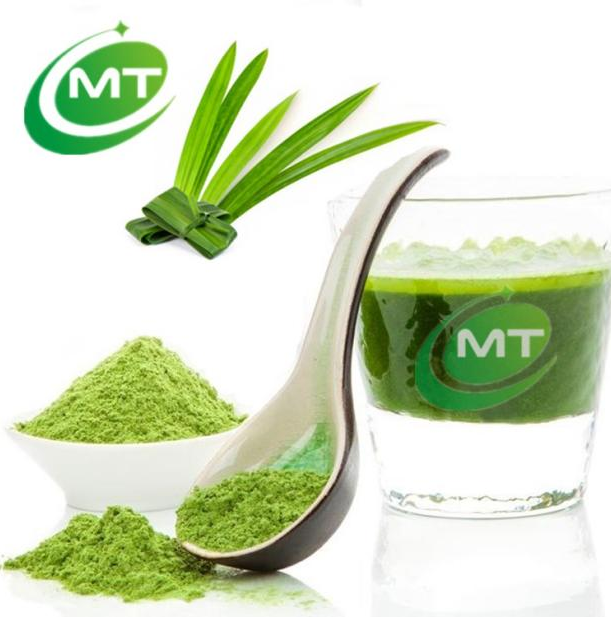
Barley Grass Juice Powder is a plant-derived ingredient used in green nutrition products, dietary supplements, and functional food formulations. Made from the juice of young barley leaves (Hordeum vulgare L.), it offers manufacturers a convenient way to incorporate barley grass constituents into powdered products.
For supplement brands and formulation developers, selecting the right barley grass ingredient involves more than choosing a concentration ratio. Nutritional composition, processing technology, particle size, dispersibility, and quality documentation can all influence the performance of the finished product.
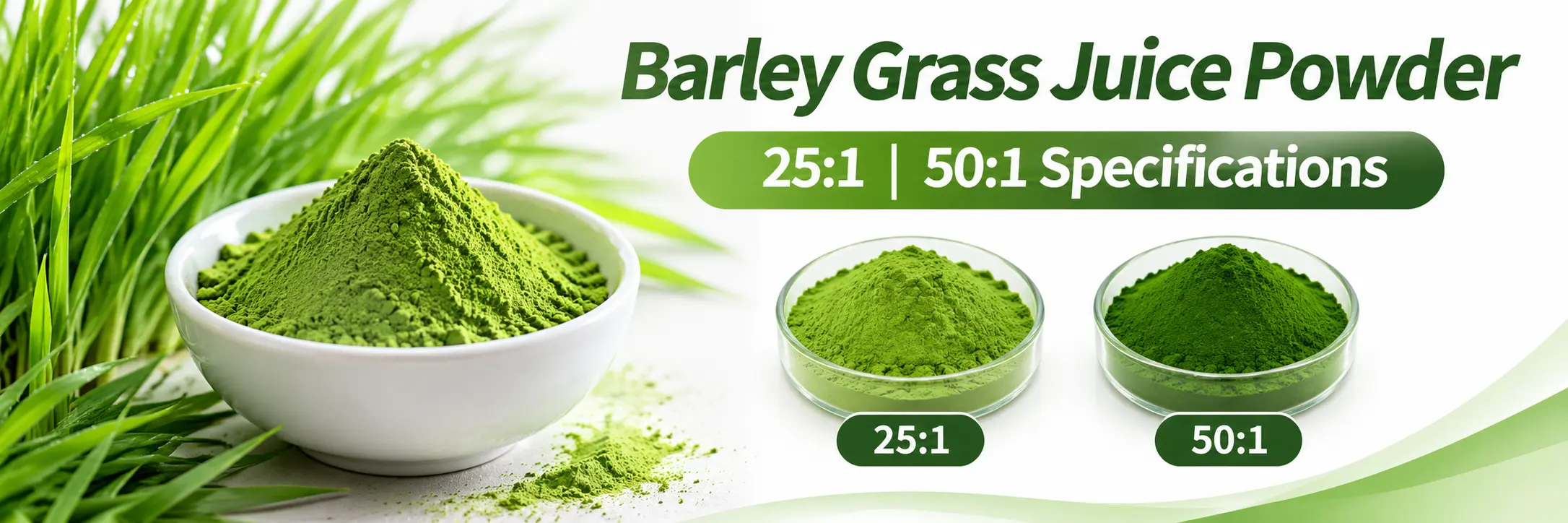
Hunan MT Health supplies Barley Grass Juice Powder in 25:1 and 50:1 specifications, with support for ingredient selection, custom formulation requirements, and OEM/ODM projects.
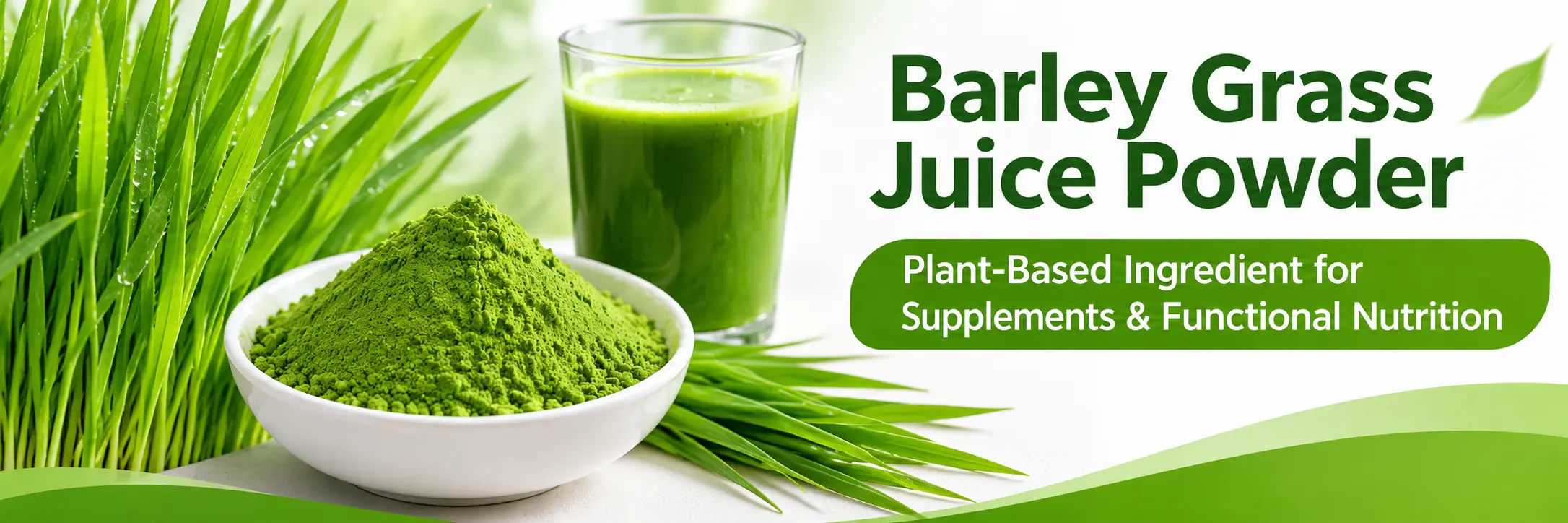
Barley Grass Juice Powder is produced from young barley leaves harvested during their vegetative growth stage. The grass is processed to obtain juice, which is then dried into powder.
Unlike whole barley grass powder, which includes much of the plant’s insoluble fiber, juice-derived powder is primarily made from extracted liquid components.
Young barley grass naturally contains chlorophyll, amino acids, minerals, and phenolic compounds. However, the composition of the finished powder depends on the raw material, extraction conditions, drying process, and any carriers used.
For product developers, understanding these differences is essential when selecting ingredients for nutritional formulations.
| Items | Specifications | Test Methods |
| Appearance & Color Odor & Taste
Mesh Size |
Fine green powder
Characteristic NLT 90% through 80 mesh |
Visual
Organoleptic 80 Mesh Screen |
| Moisture Content
Ash Content Heavy Metals Arsenic (As) Cadmium (Cd) Mercury (Hg) Lead (Pb) Total Plate Count Total Yeast & Mold E. Coli Salmonella Staphylococcus |
NMT 10.0%
NMT 10.0% NMT 10ppm NMT 1ppm NMT 1ppm NMT 0.1ppm NMT 3ppm NMT 10,000cfu/g NMT 1000cfu/g Negative Negative Negative |
5g / 105℃ / 2hrs
2g / 525℃ / 3hrs Atomic Absorption Atomic Absorption Atomic Absorption Atomic Absorption Atomic Absorption |
| Shelf Life | 2 years | |
| Remarks | Store in a well-closed container away from moisture, heat and strong sun.
Packing: Fiber drums and two plastic-bags inside. 25kg/drum. |
|
For supplement and functional food manufacturers, consistent quality is essential.
Key evaluation criteria include:
Botanical identity: Hordeum vulgare L.
Raw material and juice extraction method
Definition of the 25:1 or 50:1 ratio
Particle size and bulk density
Moisture content and water activity
Microbiological specifications
Heavy metal and pesticide testing
Carrier ingredients and allergen information
Certificate of Analysis (COA) and Technical Data Sheet (TDS)
Because barley is a gluten-containing cereal, manufacturers should also verify gluten status and applicable allergen labeling requirements. Harvesting young barley grass does not automatically establish that a finished powder is gluten-free.
1. Naturally Occurring Plant Compounds
Barley grass contains chlorophyll and various phenolic compounds that have attracted interest in food science research.
These constituents make barley grass juice powder relevant to plant-based nutrition concepts. However, their presence does not establish specific therapeutic benefits in the finished ingredient.
2. Suitable for Custom Nutritional Blends
Barley Grass Juice Powder can be combined with other ingredients in multicomponent formulations.
Potential combinations include spirulina, chlorella, wheatgrass, fruit powders, and selected botanical extracts.
Compatibility, sensory characteristics, and processing stability should be evaluated before commercial production.
3. Convenient Powder Processing
The dried format allows easier ingredient weighing, blending, transportation, and packaging compared with fresh barley grass juice.
Particle size, bulk density, flowability, and moisture content are particularly relevant when designing capsules, sachets, and powder blends.
4. Flexible Product Development
Barley Grass Juice Powder can be evaluated for different serving formats, ingredient concentrations, and packaging concepts, making it useful for brands developing differentiated green nutrition products.
Understanding ingredient behavior is essential for successful product development.
Chlorophyll and color: Barley grass pigments contribute a recognizable green appearance. Their stability can be affected by heat, acidity, oxygen, and storage conditions.
Dispersibility: Juice-derived powder may disperse differently from whole grass powder, but complete water solubility should not be assumed without testing.
Nutritional composition: The content of minerals, amino acids, and other constituents depends on processing and should be verified through analytical data.
Moisture sensitivity: Like many botanical powders, barley grass juice powder requires appropriate packaging and storage to minimize moisture uptake and quality deterioration.
These characteristics should be considered during formulation trials rather than relying solely on the ingredient's nominal concentration ratio.
Dietary Supplements
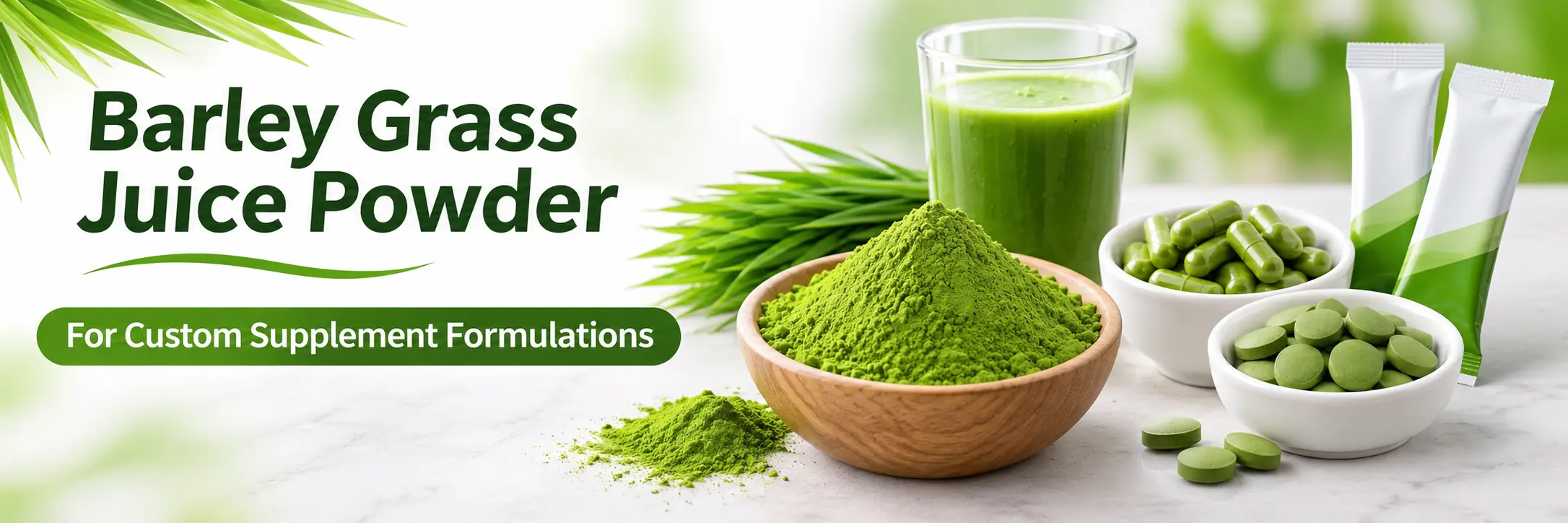
Barley Grass Juice Powder can be incorporated into capsules, tablets, and powdered supplement formulations.
For capsule and tablet production, manufacturers should evaluate particle size, flowability, bulk density, and compatibility with other ingredients.
Green Nutrition Powder Blends
The ingredient is suitable for greens powders and multicomponent plant-based nutrition products.
It can be formulated alongside algae powders, other grass-derived ingredients, and selected fruit or vegetable powders.
Functional Beverage Powders
Barley Grass Juice Powder can be used in powdered drink formulations where plant-derived ingredients are desired.
Developers should assess sedimentation, flavor, color stability, and reconstitution performance before selecting a specification.
Meal Replacement and Nutritional Products
The powder can be incorporated into meal replacement and nutritional blends as a botanical component.
Its inclusion should be based on formulation objectives and verified nutritional composition, rather than assuming that it provides complete nutrition.
Customized Sachets and Private-Label Products
Single-serving sachets and customized powder blends are potential formats for brands developing convenient daily nutrition products.
The final formulation should be assessed for ingredient compatibility, serving size, packaging protection, and shelf-life requirements.
What is the difference between Barley Grass Juice Powder and Barley Grass Powder?
Barley Grass Juice Powder is made from extracted barley grass juice, while whole barley grass powder is produced by drying and milling the grass. Their fiber content, texture, and dispersion characteristics can differ.
Is 50:1 Barley Grass Juice Powder better than 25:1?
Not necessarily. The appropriate specification depends on processing methods, analytical composition, formulation requirements, and intended applications.
Is Barley Grass Juice Powder completely water-soluble?
Not necessarily. Dispersibility and solubility depend on the product specification, processing conditions, and formulation. Manufacturers should conduct application testing.
Can Barley Grass Juice Powder be used in capsules?
Yes. It can be considered for capsule formulations, provided its physical properties, dosage requirements, and ingredient compatibility are suitable.
Can Hunan MT Health support customized formulations?
Hunan MT Health can discuss customized ingredient specifications, formulation requirements, packaging options, and OEM/ODM project needs with B2B customers.
Hunan MT Health try best to understand customer’s needs, predict the market changes, put forward innovative solutions, Adopt creative thinking and advanced technology to improve better service. You are welcome to visit our company any time!
Chat
Leave Your Message
Send your inquiry


 EN
 ZH
 AR
 TH
 EN_GB
 DA
 DE
 ES