Aug 20, 2026
Ube powder is a purple-colored ingredient made from ube, also known as purple yam. It is increasingly used by food and beverage manufacturers because of its distinctive purple appearance, mildly sweet taste, and broad formulation potential.
From ube lattes and bakery products to ice cream, dessert mixes, and plant-based foods, ube has developed from a traditional ingredient into a recognizable flavor and color trend in international markets.
For manufacturers and B2B buyers, however, “ube powder” can refer to different products. Some powders are made primarily from dried purple yam, while others may be formulated products containing sweeteners, flavors, colors, or other ingredients. Understanding the raw material and processing method is therefore important when selecting an ingredient for commercial production.
This article explains what ube powder is, how it is made, where it is used, and what B2B buyers should consider when sourcing it.
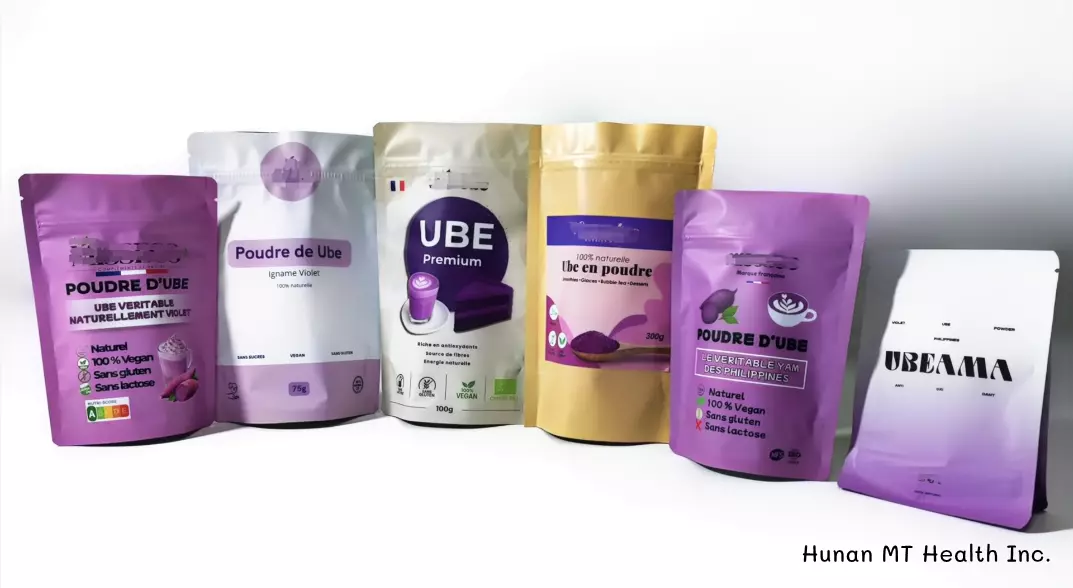
Ube powder is a powdered ingredient made from purple yam, most commonly Dioscorea alata. The word “ube” is widely associated with purple yam in Filipino cuisine, where it is used in products such as desserts, jams, cakes, ice cream, and other sweet foods.
Pure ube powder is generally produced from processed and dried purple yam and contains the natural characteristics of the raw material, including:
The exact color and composition can vary according to the variety of purple yam, growing conditions, maturity, processing technology, and final product specification.
No. Ube and purple sweet potato are different botanical ingredients.
Ube generally refers to Dioscorea alata, a type of purple yam, while purple sweet potato is commonly associated with varieties of Ipomoea batatas.
Both ingredients can have a purple appearance and may contain anthocyanin pigments, but they differ in:
For B2B purchasing, buyers should confirm the scientific name and raw material source rather than selecting a product based only on its purple color.
The manufacturing process can affect the powder’s color, flavor, texture, moisture level, and performance in a finished product.
Although processing methods vary by manufacturer, a typical ube powder production process includes the following steps.
Fresh purple yams are selected according to requirements such as:
Raw material consistency is an important starting point for maintaining batch-to-batch quality.
The purple yams are washed to remove soil and other surface materials. Depending on the process, they may then be:
Proper preparation helps support food safety and consistent processing.
The prepared yam may be subjected to controlled thermal processing, depending on the intended product and manufacturing process.
This stage can help prepare the material for drying and influence characteristics such as:
Processing conditions should be carefully controlled because excessive heat may affect the natural color and sensory profile.
The processed ube is dried to reduce its moisture content and improve storage stability.
Possible industrial drying technologies include:
The selected method can influence the final powder’s color, flavor, particle structure, and cost.
After drying, the material is milled into powder and may be sieved to achieve the desired particle size.
Fine particle size can be important for applications such as:
Before packaging, manufacturers may evaluate parameters such as:
The finished powder is then packed using appropriate packaging materials to help protect it from moisture and environmental exposure.
Ube powder typically has a mild, earthy, and slightly sweet flavor.
Its taste is often described as less intensely sweet than many fruit powders. Depending on the raw material and formulation, it may also have subtle notes that work well with:
The sensory profile of commercial ube powder can vary. A pure purple yam powder should be distinguished from flavored “ube powder” mixes that may contain added sugar, flavorings, or colorants.
For product developers, checking the ingredient list and product specification is essential.
Ube powder is primarily used as a food and beverage ingredient. Its combination of color, flavor, and plant-based positioning makes it suitable for a wide range of product categories.
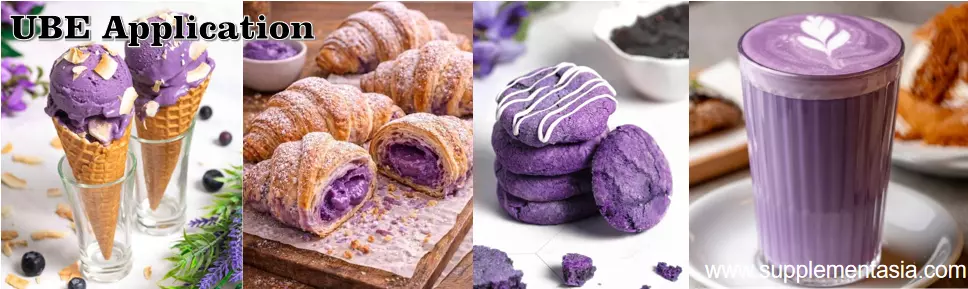
Ube has become particularly popular in visually distinctive beverages.
Applications include:
Because pure ube powder may not dissolve completely like a highly soluble extract, manufacturers should evaluate its dispersibility, particle size, sedimentation behavior, and viscosity in the final beverage.
This is particularly important for ready-to-drink products.
Ube powder can be used in:
It can contribute a distinctive color and botanical identity to finished products.
The amount used should be optimized through formulation trials because factors such as pH, heat exposure, and interactions with other ingredients may affect the final appearance.
Ube is widely associated with dessert applications, including:
Its mild flavor can work particularly well in combination with coconut and vanilla.
For industrial manufacturers, powdered ube can offer advantages in storage and formulation convenience compared with handling fresh yam.
Potential confectionery applications include:
Color performance should be evaluated in the actual formulation because the appearance of the final product can be influenced by the base ingredients and manufacturing process.
As demand for recognizable plant-derived ingredients continues to grow, ube powder can also be used in:
Its botanical origin and recognizable purple appearance can support plant-based and clean-label product concepts, depending on the complete formulation and applicable market requirements.
Ube powder can contribute a natural purple color to food products because of pigments naturally present in purple yam.
However, there is an important difference between using ube powder as a whole-food ingredient that contributes color and using a specifically regulated or standardized food color additive.
The final color performance can depend on:
For this reason, manufacturers should conduct application testing before positioning ube powder as the primary color solution for a commercial product.
If a product requires highly consistent and intense color, a buyer may need to compare whole-food powder, concentrated powder, and standardized natural color ingredients based on the target market and application.
| Application | Typical Use of Ube Powder | Key Considerations |
|---|---|---|
| Beverages | Lattes, milk tea, smoothies, drink powders | Dispersibility and sedimentation |
| Bakery | Cakes, bread, cookies, premixes | Heat and color performance |
| Desserts | Ice cream, pudding, fillings | Texture and flavor balance |
| Confectionery | Candy, chocolate, fillings | Color compatibility |
| Plant-Based Foods | Vegan drinks and desserts | Formula compatibility |
| Nutrition Products | Powder blends and meal concepts | Ingredient consistency |

At Hunan MT Health, we understand that ingredient sourcing for commercial production requires more than simply supplying a purple powder.
We focus on supporting B2B customers with:
Ube powder is one of our core product categories, and we work with food and beverage manufacturers seeking a reliable ingredient for innovative purple-colored product concepts.
Whether you are developing an ube latte, bakery product, dessert, plant-based beverage, instant powder, or customized food formulation, our team can help you evaluate the appropriate specification for your project.
Ube powder is a versatile purple yam ingredient with growing commercial potential in global food and beverage markets. Its distinctive appearance, mild flavor, and compatibility with desserts, beverages, bakery products, and plant-based concepts make it attractive for manufacturers seeking recognizable botanical ingredients.
The key to successful product development is selecting the correct powder for the application. Buyers should confirm the botanical identity, ingredient composition, physical specifications, and performance requirements rather than relying only on product names or color.
If you are sourcing bulk Ube Powder for commercial food and beverage production, Hunan MT Health can support your project with product specifications, samples, technical information, and customized B2B supply solutions.
Contact Hunan MT Health today to discuss your Ube Powder requirements and request a sample or quotation.
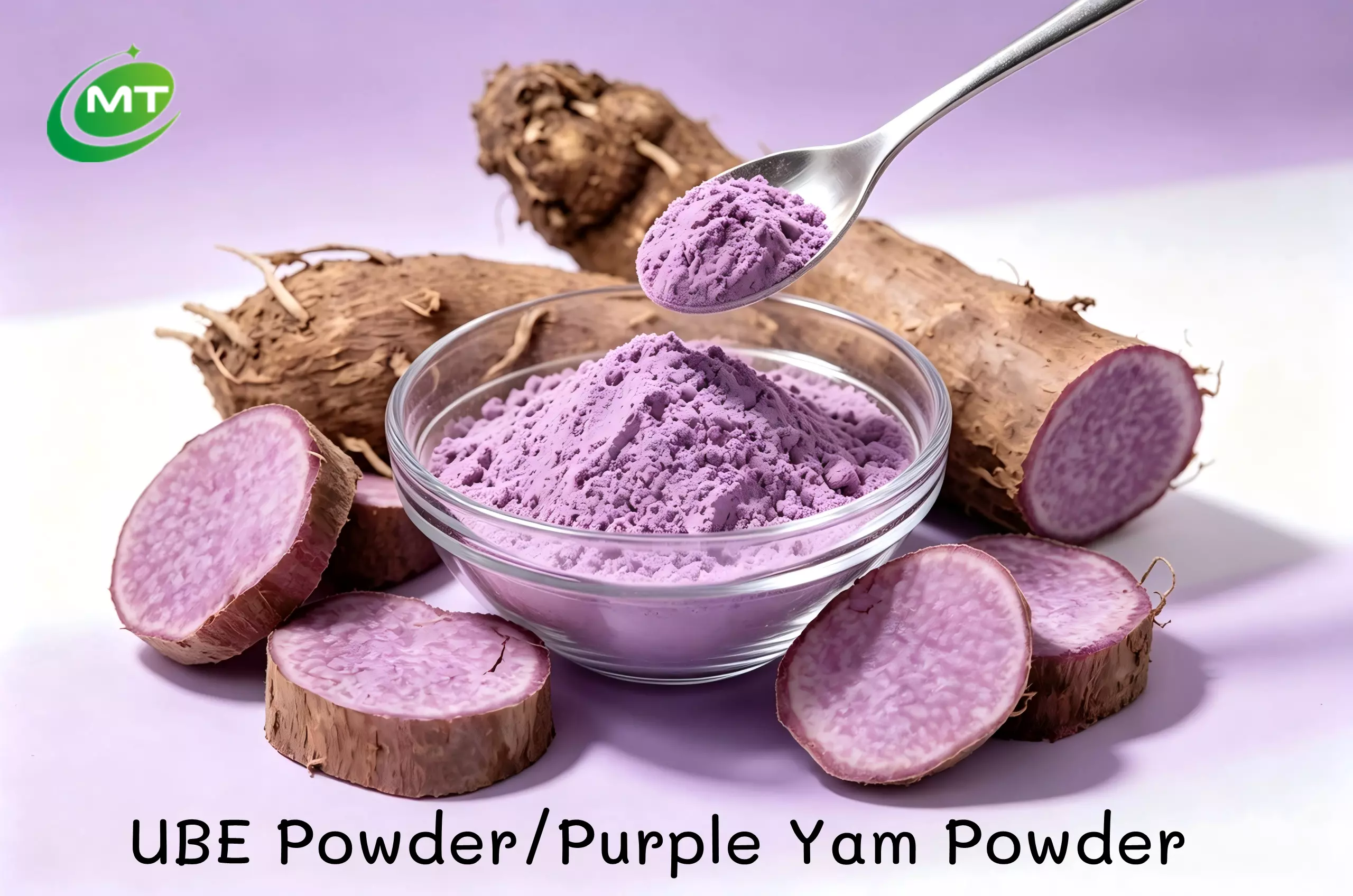
ube purple yam powder
Hunan MT Health hace todo lo posible para comprender las necesidades del cliente, predecir los cambios del mercado, proponer soluciones innovadoras, adoptar el pensamiento creativo y la tecnología avanzada para mejorar un mejor servicio. Le invitamos a visitar nuestra empresa en cualquier momento.
Chat
Deje su mensaje
Envíe su consulta


 ES
ES  EN
EN  ZH
ZH  AR
AR  TH
TH  EN_GB
EN_GB  DA
DA  DE
DE